

CIA Brief | 2025 Fall

President’s Memo
Charya Peou
Labor Day marked the official end of another fantastic CIA season, and our dedicated agents have returned to school. We wish them all the best and look forward to welcoming them back in 2026! This summer was unforgettable, with hotter-than-average weather making Preston Beach a prime spot for fun. The water was warm and inviting, even if the rocky shoreline kept us on our toes. Thanks to everyone for staying cautious and respectful while enjoying the beach.
If you’d like to get more involved, join us at a monthly board meeting or volunteer for an upcoming event—new faces and fresh ideas are always welcome! A huge thanks to all our supporters whose contributions help keep Preston Beach and Beach Bluff Park thriving. Don’t forget to join us for the Fall Equinox celebration on September 22 at 6:31 a.m. at the Sun Circle.

Autumnal Equinox 2025
James Keating
Ms. Roberta Chadis asked me the following question: “Why is the Fall Equinox of 2025 on September 22 and not on September 21?” The reason is due to our leap-year cycle, the gravitational effects of the Sun and Moon, and the elliptical orbit of the Earth. These same factors affect the Fall Equinoxes in 2026 and 2027, which occur on Sept. 22, 2026, and Sept. 24, 2027.
There is also another factor that affects the dates of Equinoxes and Solstices. The other factor is that we use the tropical year (Gregorian or Civil calendar), which measures from equinox to equinox and solstice to solstice instead of using the anomalistic year (perihelion to perihelion).
I would use the meteorological method to determine the seasons and remove any confusion about dates.
Spring: March 1 to May 31
Summer: June 1 to August 31
Autumn: September 1 to November 30
Winter: December 1 to February 28 or 29
If you thought that determining the dates of the solstices and equinoxes was confusing, try and determine the phases of the Moon. Instead of using the Sun for timekeeping, which is a daily method, many cultures and religions used the Moon for timekeeping, which is a monthly method.
There are eight primary phases of the Moon: New Moon, Waxing Crescent, First Quarter, Waxing Gibbous, Full Moon, Waning Gibbous, Last Quarter, Waning Crescent, and back to New Moon.
It usually takes about one week from New Moon to First Quarter, First Quarter to Full Moon, Full Moon to Last Quarter, Last Quarter to New Moon. This adds up to four weeks, or 28 days. This gives us 336 days per year, but if we add another month, it brings us to 364 days, which some cultures and religions did.
But as time went on people realized that it took the Moon different amounts of time to orbit the Earth, depending how you measured the rotation. If you used sidereal time (star time), it takes 27.3 days. If you used synodic time (Sun time), it takes 29.5 days.
How did these timekeeping problems get corrected? A calendar in general use was introduced in 1582 by Pope Gregory XIII as a revision of the Julian calendar, adopted in Great Britain and the American colonies in 1752, marked by the suppression of 10 days or after 1700, 11 days, and having leap years in every year divisible by four with the restriction that centesimal years are leap years only when divisible by 400.
We covered a lot in this issue, so I leave you with the following:
The Full Moon in September is on the 7th, and in Asia, they will have a lunar eclipse, and it will not be visible in North America. Do we have more solar eclipses or lunar eclipses? This Full Moon is called the Corn Moon, but what happen to the Harvest Moon?
Please join us for the Autumnal Equinox on Monday, September 22nd at 6:30 a.m. Lisa Kawski and Kampa Vashi Deva will lead a ceremony at sunrise at the Sun Circle on Beach Bluff Park at Preston Beach in Swampscott.
Sightings: Gulls!
Sheryl Levenson
We see them, we hear them, we watch them, and we find their poop everywhere (sometimes on us!). What are they? Gulls! We refer to them as seagulls, but there are many different types of gulls.
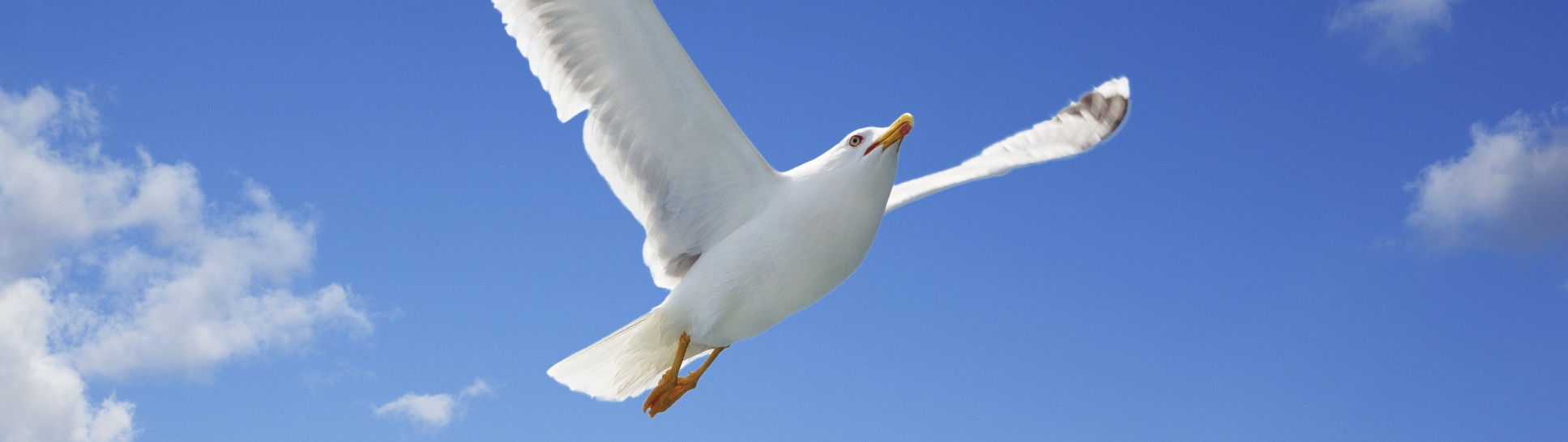
“Seagull” is a nickname, but “gull” is the formal name for the family where these birds belong. Some of the more common types are Herring Gull. This is a common species, often what we think of as a “seagull.” They have white bodies, pale pink legs, gray backs and wings, and yellow beaks and eyes.
A Ring-billed Gull has a gray back and wings, black wingtips, and a black ring on its yellow bill.
A Western Gull is a large bird with a dark gray back with pink legs and areas of black.
A Great Black-backed Gull is the largest gull with its black back and wings, a white head, and pale pink legs.
A Lesser Black-backed Gull is a somewhat small gull with a dark gray back and bright yellow legs.
A Laughing Gull has a black head, red bill, and white neck and breast.
A Glaucous-winged Gull, mostly found along the Pacific Coast, is a lighter gray gull.
There are over 50 species of gulls worldwide. The gulls seen in Massachusetts are herring, great black-backed, ring-billed, and laughing.
Let’s focus on the gull we see the most often. The American herring gull is a large species of gull. They are 22-26 inches long and weigh 28-44 oz. Nonbreeding adults have tan streaking on their neck. American herring gulls reach adult plumage at 4 years. They have a “long call,” which can be a series of loud calls that are made while leaning forward and lowering their head.
American herring gulls can often be seen in groups, soaring over the open ocean, paddling in the water, or walking along coastlines. As opportunistic foragers, they commonly spend their time bathing, preening, and resting near food sources. They will take advantage of any food source they can find. From the sea, they will eat small fish, and along the coast, they will eat mollusks, crustaceans, insects, eggs, and even small birds. Regurgitated pellets have been found to contain steak and pork bones, plastic wrap and utensils, aluminum foil, paper towel and pieces of rubber, wood, metal, and glass. Open landfills were once a primary food source for gulls, but most of these facilities are now capped and closed. Outflow sewage treatment plants also attract gulls, but many of these have recently been cleaned up. But a favorite of gulls is what is disposed of by the fishing business. Even freshly plowed farm fields yield tasty invertebrates which gulls will eat.
Early in the 20th century, gulls were primarily winter visitors to the state. In 1912, the first pair of herring gulls was found breeding on Martha’s Vineyard, and in 1931, the first great black-backed gull nest was discovered in Salem. Today, gulls are a common sight in Massachusetts year-round. Their numbers have increased enormously in the past century, partially due to their protection from hunters, but also because of the increase in food sources supplied by people.
During stormy weather, large numbers often congregate on fields, freshwater lakes, and reservoirs. At night, gulls retreat to communal roosts on coastal islands or in open water on lakes and at sea. Of course, visitors to fast-food restaurants have undoubtedly witnessed flocks of gulls inspecting the dumpster at some time or another.
Baby seagulls are often hidden from view because their parents keep them in nests located in remote or high-up areas like cliffs or rooftops. They are also very protective of their young and will defend them vigorously, which can also limit observation. Baby seagulls are quite large when they leave the nests. They mature gradually, changing their brown juvenile color to the white, gray, and black adult colors. This can take up to four years, depending on the species. Their bills, eyes, and legs colors often change as they mature.
There is, in fact, a nesting pair of great black-backed gulls along Preston and Phillips Beach.
So, the myth about it being good luck if a seagull poops on you—well, maybe not.
A prevalent myth is that being pooped on by a seagull (or any bird) is a sign of good luck, prosperity, or even a message from the gods, a superstition with roots in ancient cultures and perhaps linked to the statistical rarity of such an event. However, from a biological standpoint, it is a purely natural, unintentional event, as birds cannot control their droppings.
Sightings:Basking Sharks!
Julianna Thibodeaux
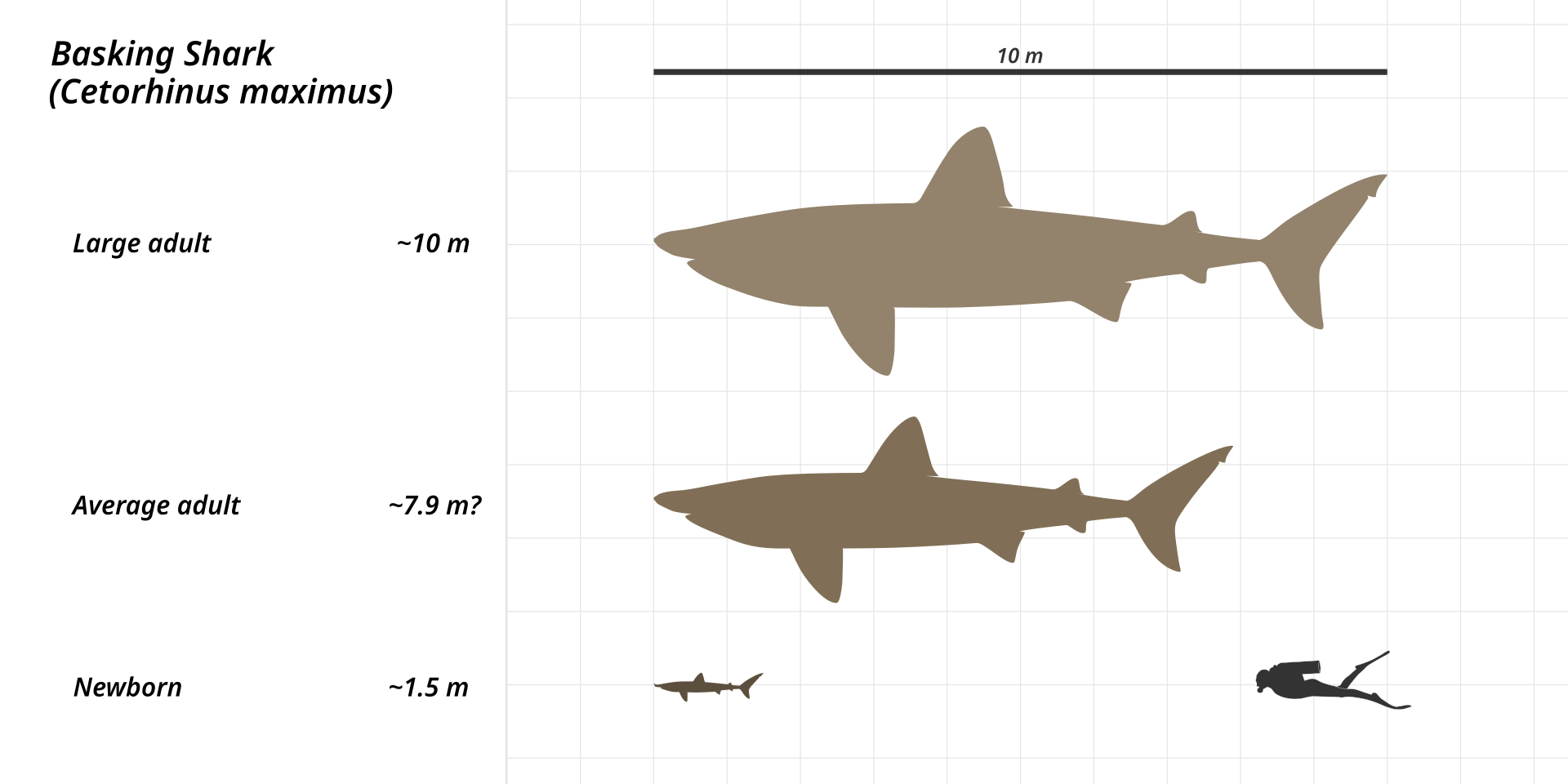
Many of you will have heard about (or watched the videos) of the basking sharks spotted off the coast in Marblehead earlier this summer. (Screen the videos here and here.) Most of us are aware of the white shark sightings that have been increasing in these local waters over the years, and some of you will have attended our events with the Atlantic White Shark Conservancy. But did you know the basking shark is the second largest fish in the world? (The largest fish is the whale shark, while the largest animal is the blue whale.) Basking sharks are filter feeders, which means they eat plankton. They can reach lengths of 40 feet and are easily confused for predatory sharks—they are quite imposing in appearance, especially when seen just below the water’s surface (cue the Jaws soundtrack!). Rest assured they are quite harmless, despite their intimidating appearance: Unlike white sharks, they will not by drawn by your blood! As plankton eaters, they typically feed near the surface, filtering their prey with large open mouths, but they can also feed deeper in the water.
Like many other sharks, they are difficult to study because they have vast roaming ranges and typically don’t stay put for more than a month or two. Unlike whale sharks, which give live birth to hundreds of small babies, basking sharks give birth to just a few—and very large—babies. These are possibly the largest of all fish babies, at least according to scientists’ observations, just beating out the great white. Pregnant females typically stay away from other females and stay solitary during gestation, so you are unlikely to spot a mama basking shark.
As one of the few species that lives in temperate latitudes both north and south of the equator, basking shark typically spend most of their lifetime in one or the other of these, but some have been studied who spend part of the year in the deep sea and move back and forth between the two hemispheres—possibly without ever coming to the surface. While we have observed in the U.S. that they are quite solitary, and rare, in England they are more common and hang out in large groups.
These majestic creatures, like so many others, are considered vulnerable to extinction due to centuries of fishing in Europe. They are legally protected is some countries, but not all, and they are sometimes captured by fisheries unintentionally. Much is still unknown about these giant fish, but if you are lucky enough to spot one, consider it a gift!
Thanks to the ocean conservancy and research organization Oceana for their advocacy and research on behalf of the basking shark.