

Fundraising
The CIA is run entirely by a volunteer board of directors.
While most associate the CIA with our parking lot at the corner of Seaview and Atlantic avenues, our organization also owns and maintains Beach Bluff Park and the Sun Circle so all may enjoy these beautiful and special places next to Preston Beach. However, as with any oceanfront property, this comes at a price, both financially and in terms of human effort. We feel it is important for all of you to know where your membership and donation dollars are spent, and what the CIA’s board and committee members deal with each day so we can all enjoy and responsibly sustain this important asset in our community.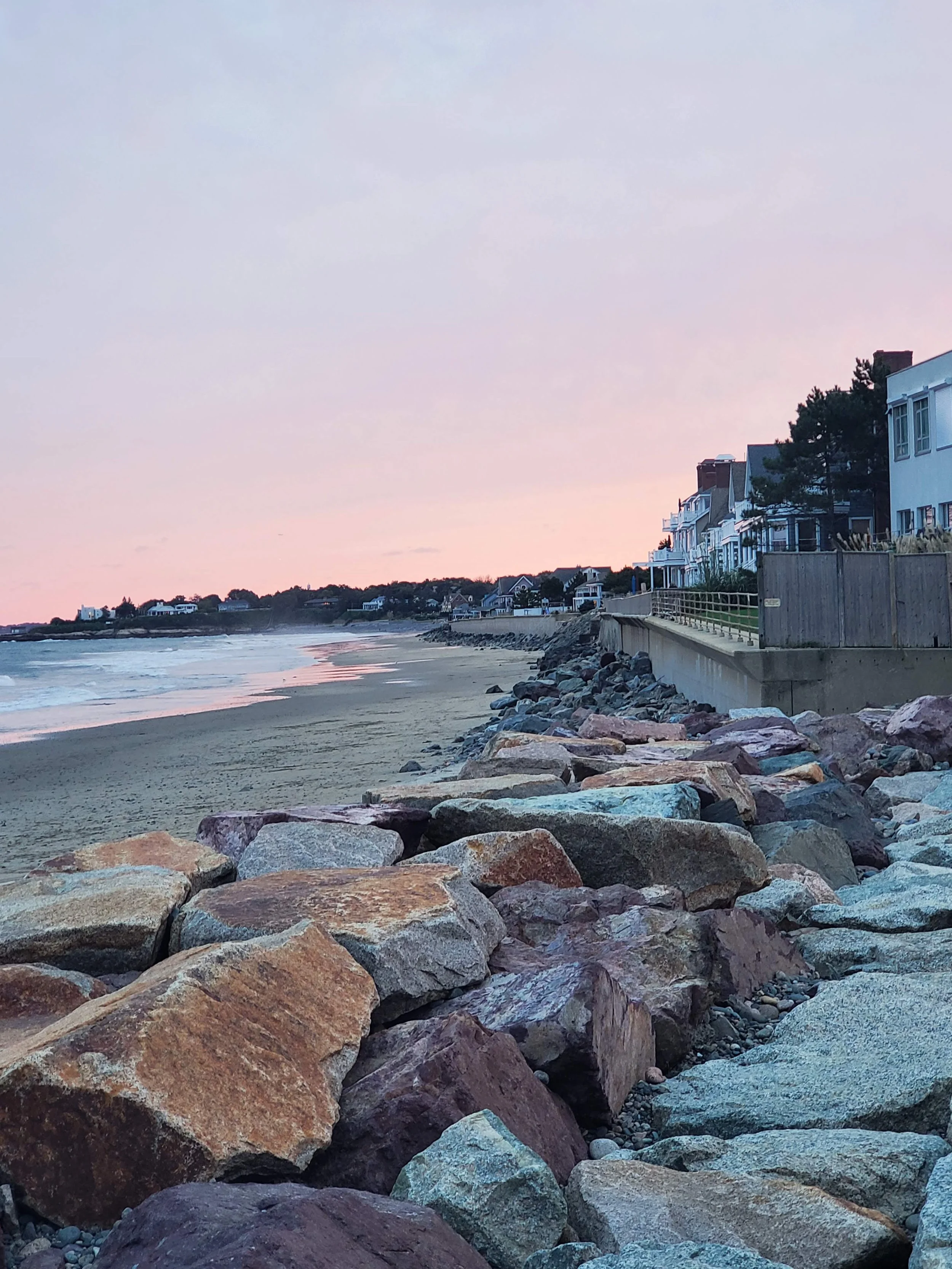
Fundraising deep dive | Where does your money go?
What the effort entails?
1
So all may understand the considerable work and cost that go into maintaining the seawall, which has ramifications beyond just the park and abutting properties. As you read this, you will notice some repetition, some technical information, and a huge amount of gratitude for your past, present, and future support.
In 1991, the CIA was gifted the land now known as Beach Bluff Park. While all of us on the board at that time were thrilled, we knew we had a large amount of work ahead of us and we were up for the challenge. We wanted to create a beautiful open space that everyone could enjoy. And we were able to do so, with a lot of help as we were challenged along the way.
In 2007 our concrete wall collapsed, causing disruption to both park and Atlantic Avenue, a major thoroughfare connecting Marblehead and Swampscott. With the support of many generous donors, we raised over $200,000 to construct a new wall. While we would have preferred another concrete (retaining) wall, the Department of Environmental Protection would only allow a revetment wall, like the one we have, as we were not protecting a home. That view has now changed, but it would be extremely cost-prohibitive to create such a wall now since the current system is in place.
What is a revetment wall?
2
A revetment wall is a sloping structure built on either an embankment or a shoreline or in front of seawalls. It has a distinct slope, while a concrete retaining wall is almost always vertical and considered the strongest and most durable choice. Since we already have a revetment wall in place—which does have its benefits—we must continue to expend the cost and effort to maintain this revetment system.
Various departments in Swampscott Town Hall have been quite helpful. We asked Gino Cresta, Director of Public Works, to tell us more about how our seawall affects Atlantic Avenue, some of the problems with a revetment wall, and how our beach has changed over the years. Here is his response:
The seawall protects Atlantic Ave from erosion. With coastal flooding becoming more prominent, without the wall the park and then the roadway would eventually end up in the ocean. This would take many years to happen but is a distinct possibility.
A revetment wall, as opposed to a concrete retaining wall, has numerous voids throughout the wall. These voids allow for ocean water to pass through during periods of high tides. The ocean water exiting the wall does not necessarily pass through the voids that it entered through. This resulting hydrostatic pressure causes the revetment stones to shift and ultimately be displaced.
It appears to me, as a result of climate change, over the years the high mean water mark is getting closer to the seawall.
North Shore Marine had been hired to build our revetment wall in 2007 and has done the many repairs on it over the years. Kevin Pelletier of North Shore Marine was also asked about the more technical aspects of our seawall, and offered the following:
Stone revetment assemblies are one of the most economical methods of shoreline stabilization and protection available. Stone revetments are widely used and accepted by Federal, State, and local authorities as a proven design to provide protection to waterfront areas which are at risk of erosion and scour.
Revetment designs vary depending on the location and particularly the velocity zone. Design components typically consist of armor stones (exterior stones sized to the location), bedding stone (smaller stone to maintain the established slope), and a graded slope with either heavy gauge geotextile fabric or graduated stone to prevent migration of fine material through the open face of the armor stone. Locations subject to heavy wave action are generally designed with a rough surface to help break up and distribute the forces of wave action.
The Challenges
3
The components of the CIA revetment system that contribute to the operational expenses include the severe impacts of south/south-easterly weather events, the overall design height of the revetment, and the elevation of the land-side grade. The top of wall height and upland grading elevations were predetermined by land use requirements, which unfortunately contribute to the upland maintenance and yearly reconstruction of the upland areas. Where making changes to the elevation of the wall is not an option, an “outside the box” approach to minimizing storm impacts may need to be explored and considered.
The Maintenance
4
The average seasonal maintenance items on the beach side currently require one to three days on the beach with a machine and a crew placing chink stones and replacing larger stones that have been displaced. It is typical that supplemental angular chink stones are imported from the quarry to minimize the use of the rounded stones typically found on the beach, as these round stones tend to act like ball bearings and do not lock together. The frequency of this work ranges from yearly to every couple of years and is dependent on the storm season. Another maintenance item we have witnessed is the displacement of the top layer or layers of stone from the revetment. This happens less frequently and is associated with long-duration severe storms. This situation poses a significant risk to the integrity of the wall during heavy storm conditions and could potentially lead to failure. The repair scenario for this is more complex due to limitations on topside access and the size of stone.
Mr. Pelletier also explains that the “upland landscaping is vulnerable to severe storm conditions with the weakest area being the ocean facing stairway. This funnels the wave action up and over allowing a near continuous flow of water which scours the sand and vegetation.”
As you can see, yearly maintenance to the wall will likely remain a requirement, and the reasons to do so are many. We’re grateful to Kevin Pelletier, Gino Cresta, and the Town of Swampscott for their work over the years and for helping us to understand the issues. We felt it was important for you, our members, to appreciate what is involved, and why. In a world that is dealing with shrinking coastlines and global warming, it literally takes a village, and the costs will increase indefinitely.
What Can You Do?
The first step is awareness. We will always keep you fully informed of the complexity of our situation, and why we do what we do, so you can understand the stakes and costs involved. Your involvement and support are crucial to our ongoing efforts, and this includes the contribution of your time and talents or your financial support, or both if this is possible based on your personal circumstances.