

CIA Brief | 2022 Winter

President’s Memo
Kelly Uphampresident@ciabeachbluff.orgHappy Holiday Season!
Thanks to you, 2022 has been a great year for our organization! We hope that our reinvestments in the aesthetics of the parking lot have been welcome updates for you and the continued maintenance of our park.
We are in the process of wrapping things up and preparing the park for the inevitable winter storms but we think you'll agree that it's a special spot no matter the season. We always appreciate your support and help. Our success depends on you.
With the discord and unrest in the world right now, I hope everyone can make time to take in the serenity of Beach Bluff Park and the sometimes peaceful, sometimes wild, Preston Beach.
The Officers and Board of Directors wish everyone a safe, healthy and enjoyable holiday season.
Thank you again and see you in 2023!
2022 Winter Solstice - 3 Fun Facts
Roberta Chadis
Shortest Day of the Year - The sun in the Northern Hemisphere is at its lowest, which means daylight hours are only around nine hours versus 12 hours on the Summer Solstice, the longest day of the year.
Definition of “Solstice” - From the Latin “Solstitium,” the meaning is “the Sun stands still.” In winter, the Sun is at the most southern position shining on the Tropic of Capricorn where it seems to stand still.
Why does it get colder when the days get longer after Winter Solstice? - Even though the days gradually grow longer, the seas are releasing large amounts of heat as the temperature of the earth cools down. Since the seas cover 70% of Earth, the solar energy of the sun is considerably diminished over the winter months in the Northern Hemisphere.
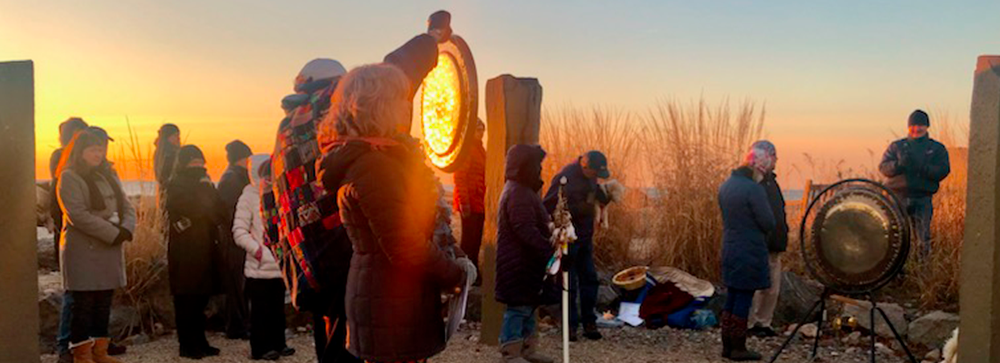
Hope you can join us for the Winter Solstice ceremony at the Sun Circle on Beach Bluff Park on Wednesday, December 21st at 7:05 am led by Lisa Kawski & Kampa VaShi Deva
Children of the Waters - Winter Solstice
Original Poem by Donald Orne
One year ago, Donald Orne, our beloved Gong Master, led his last ceremony for us at the Sun Circle. We asked him to contribute something for the Winter Solstice this year, and we’re delighted he agreed. He shares the following poem to let us know he keeps us all in his heart. – Roberta Chadis
Solstice, sunshine, snowflakes
Flashed across my view
Heart songs, gently lifted me
and told me, this is true
You are here because you wanted
You are here because you came
Called you were by Light forms crossing
Entered you by rain
Softly did you rest yourself
Upon this hallowed ground
Solemnly you waited
till the gong resounds
Now you waken brightly
Now you stand so clear
Now you are empowered
Now you are so dear
Hold me in the last dark nights
Hold me till I see
Hold me till the sun comes up
Bold across the sea
Stand we now in sunlight
Glistening our kin
Singing in the rainbows
Dancing in our skin
So we vision, so we sing
So we dance until the spring
So we gather round the fire
Holding hands round ancient spires
Sweetly do we raise our hands
Sweetly do we rise
Tis the time for us to lift now
Unconditional love the great surprise
Once we came and split apart
Painful it was then
Now we join forever more
And return to the one again.
Putting the Park to Bed for the Winter
D. Bruce Greenwald
As we head into another winter, as with all gardens, we need to prepare for seasonal storms and freezing conditions. We begin by taking up the sections of walkway planks that are in danger of washing away. Although the planks are quite heavy, they do float with storm surges. In the past, when we tried to leave them in place, one storm carried many sections across Atlantic Avenue. Now the crew stacks them in two locations where they are safe for the winter.
The three standing stones at the top of the stairway to the beach are there to help dissipate the wave action that inevitably floods the park in heavy storms. We cannot prevent Mother Nature from her actions, but we do what we can to prevent as much damage as possible.
Both Swampscott and Marblehead Water and Sewer Commissions turn off the water to the park and parking lot at autumn’s end and we have the irrigation systems blown out to prevent damage to the piping. The dog fountain has its faucet removed to prevent damage to the works.
Grasses and other vegetation that have been building up in our compost pile at the north end of the park are overflowing by this time of year. The crew hauls the excess material away to make room for next year’s collections.
Thanks to all volunteers and members for their help. It is only through a combined effort of many hands that we continue to make our park a special place and keep it in good shape for the coming seasons.
Look but Don’t Touch: Swampscott Wildlife Presentation
Roberta Chadis
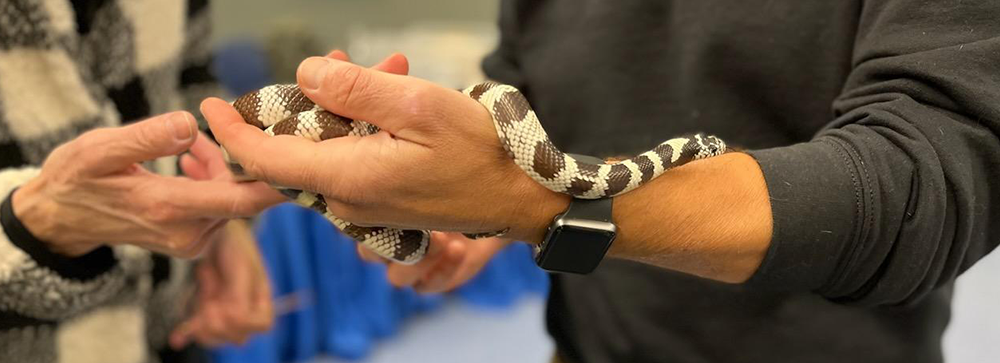
Hosted by the Swampscott Conservancy and the Town of Swampscott, licensed state wildlife rehabilitator Dan Proulx shared his expertise with the North Shore community in an informative and lively presentation on Nov. 15 at Swampscott High School. Proulx is a Problem Animal Control (PAC) agent with many years of experience as an Animal Control Officer on the North Shore. Proulx’s fact-filled presentation included guest appearances with a snake, an owl, and a hawk. His talk addressed many important topics, including typical behaviors of wildlife, common injuries and signs of disease, the fatal effect of rodenticides, and who to call about wildlife issues.
Here are a few interesting things you need to know based on Dan’s presentation:
Wildlife Physical Contact: Always wear gloves, don’t put your hands near wildlife mouths or beaks, and never touch wildlife with your bare hands. If you think you’ve been in contact with feces or urine, be sure to keep your hands away from your mouth.
Food: Never feed wildlife. This can prove to be fatal for wild animals whose ability to digest certain food varies with their species.
Feeders: Use waste free food and a catch pan.
Keeping wildlife away from your Property: Sprinkling cayenne pepper in your garden can be helpful. Using reflective pinwheels and a bobblehead owl are also useful as long as you move them around every day.
You can also check out these sites on Facebook:
On The Wing
Wolf Hollow
Cape Ann Wildlife (CAW)
Dan’s Wildlife Rescue
Did You Know That the Ocean Has an Underwater Christmas?
Sheryl Levenson
The ocean is a living portion of our planet. We have weird, wonderful, small, and big underwater life.
Let us introduce you to the living creatures that celebrate this festive season all year round. The scientists who discovered them gave them these nicknames. Even though most of us will never see these special creatures, it is important that we know they exist.
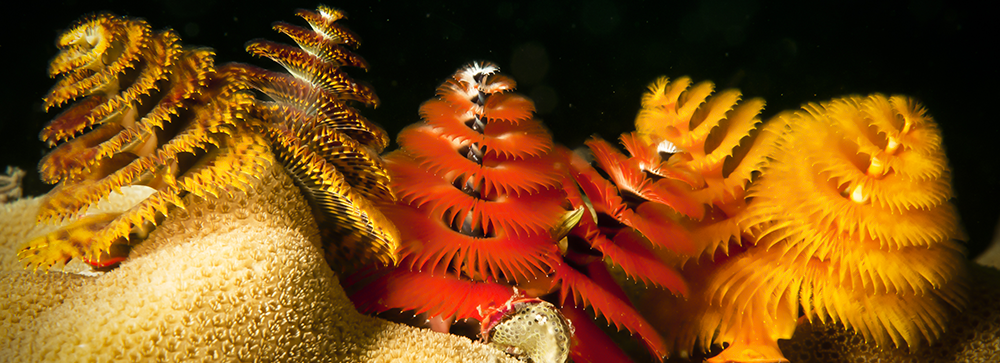
Christmas Tree Worms: This is a very colorful worm that has spectacular plumes that spiral to resemble a fir tree. It comes in festive colors of red, yellow, blue and orange. They are essential to our coral reefs as they protect them from being eaten by crown-of-thorns starfish.
Jingle Shells: They are called jingle shells because of the noise they make when strung together. They are found in shallow waters, beaches, oyster beds, and mollusk shells. They are found as far north as the coast of Nova Scotia and to the south all the way to Brazil.
Candy Cane Shrimp: These are native to the Indian and Pacific oceans. Although not sweet like a candy cane, they look like one.
Pinecone Fish: This fish is great for an aquarium as it glows in the dark. They live under caves and rocks on the seafloor, coming out in the evening to feed.
Sea Angels: These creatures look like sea angels but are actually sea slugs. Because they have lived in the ocean so long, the “foot” that runs along the bottom of most gastropods has split and became the wings they use to flutter around the ocean. They are only two inches long and live in the cold part of the ocean.
Snowflake Moray Eel: This eel is named for its markings that resemble a snowflake. It has white, black, and yellow splotches all over the skin, which form what looks like a snowflake. Their faces appear to be smiling and their eyes are rimmed with gold.
Marine Snow: This is a phenomenon, not a creature. Essentially, it is fish poop! Combined with decaying plants and other animal matter, it falls into the seabed. It looks like white fluffy pieces that resemble snow. This is essential to the ocean by capturing and storing carbon.
Sea Weed Parties
Krissy Sgambellone
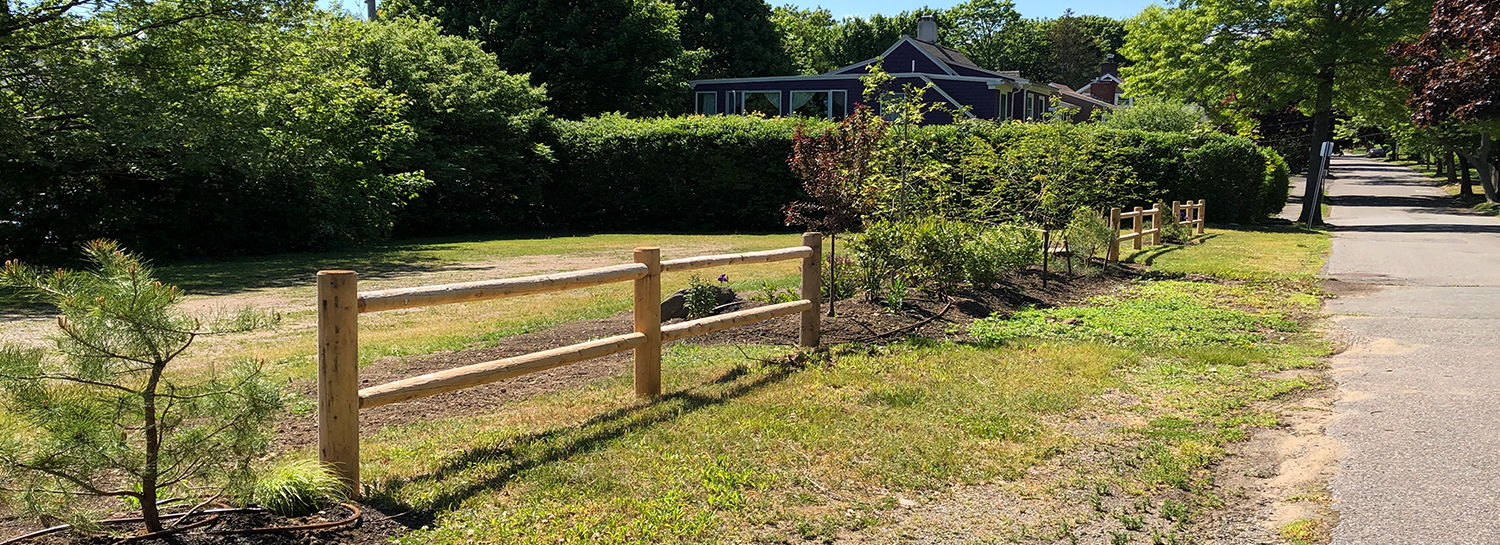
Each year the Clifton Improvement Association’s amazing network of members and volunteers are an invaluable resource in keeping Beach Bluff Park beautiful. While we begin to look ahead to the 2023 season, we will be creating plans for beach cleanup days for litter and debris, as well as time to help keep the weeds in the park at bay. Your continued support for what we have named our Sea Weed Parties will be advertised through our newsletters, social media platforms, and email.
As always, the weather will help dictate our schedule. If the snow has melted and the weather cooperates, then we will have our first party on Earth Day, Saturday, April 22. Additional parties will be hosted throughout the summer.
Please visit the Clifton Improvement Association for updates as spring approaches.