

CIA Brief | 2022 Fall
President’s Memo
Kelly Upham
Thank you all for your support this summer whether it was buying a membership or plank, making a donation, or helping collect debris left in the park, beach or sidewalk as you passed through. ”It takes a village” to keep our space maintained, accessible and peaceful!
We are happy to announce we are restarting regular weeding events under the coordination of board member Krissy Sgambellone. Our new Sea Weed Parties will kick off on September 18 from 1-3 when we will focus on eradicating the summer weeds to prepare the park for fall plantings. We hope you will join us! Bring your own weeding tools, a bucket and a smile and we’ll get to work. We will also post this under events on our website, so please help us spread the word!
As some are aware, the crosswalk at Seaview and Atlantic, connecting our parking lot and park, has become a source of concern and need for caution. While we are actively working with the Marblehead Police on potential solutions, we strongly recommend that no one make the assumption that cars see you as you begin to cross the street, even though we all know pedestrians have the right of way at a marked crosswalk. Be sure to stop, look, wait for traffic to halt, and then wave and cross. We thank you for your cooperation and vigilance in keeping everyone safe!
Are you interested in getting involved with the CIA? No task is too small, whether your thing is taking care of the park, getting involved in our finances, helping with our summer operations, participating in community outreach, or contributing to this newsletter. Let me or any of our board members know if you’d like to join one of our monthly board meetings to learn more. We welcome new participants and ideas.
Knock Knock: Who’s There?
The Fall Equinox!
Roberta Chadis
Each September in the Northern Hemisphere we celebrate the Fall Equinox when the hours of sunlight become dramatically fewer, and the air becomes noticeably crisper.
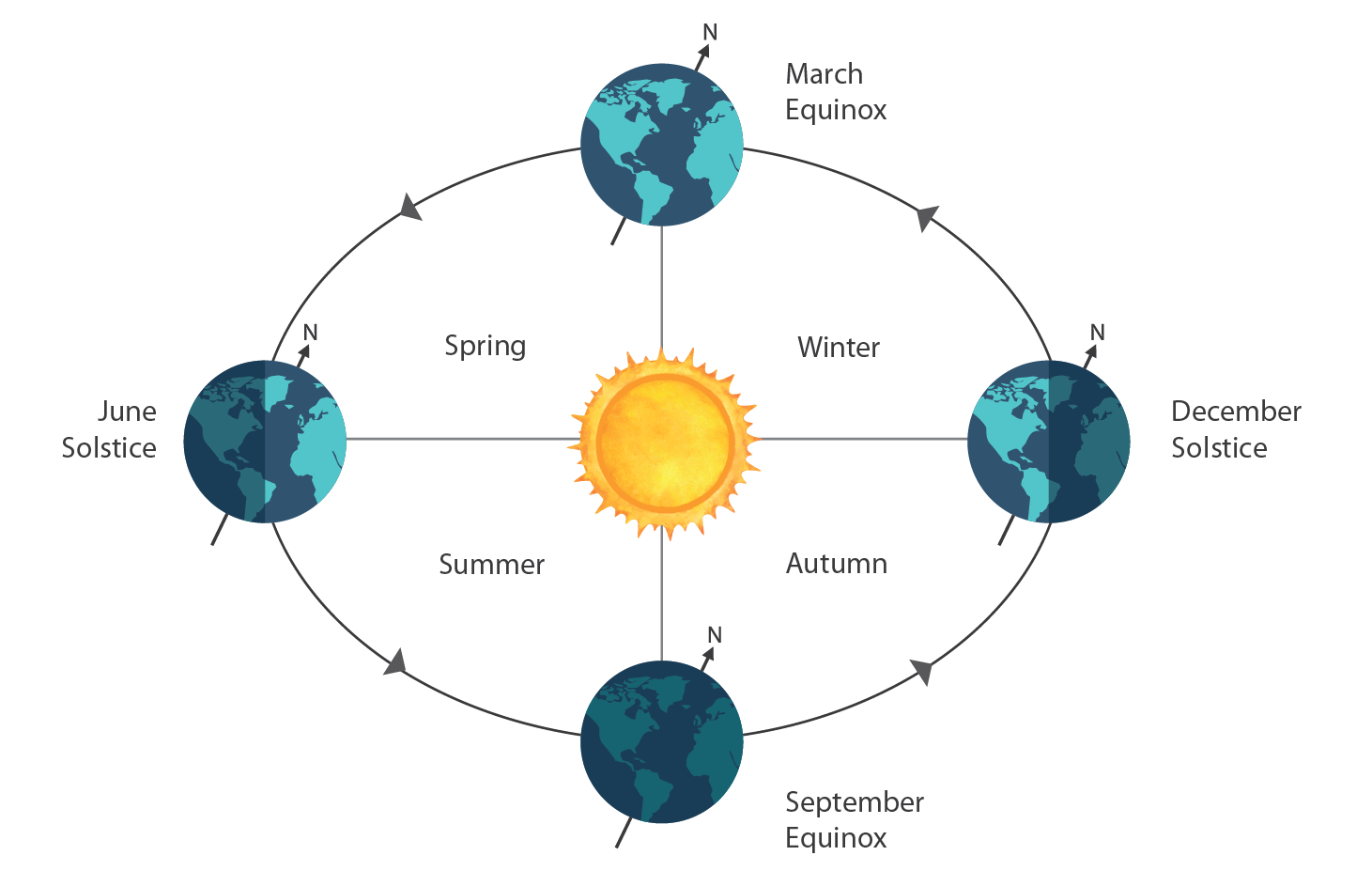
What exactly is the equinox? It’s all about Earth’s tilt and orbit around the sun. Earth spins once daily at a tilt of about 23.4 degrees on its axis of rotation, which is the imaginary line from the North and South Poles. For six months the North Pole, pointed toward the star Polaris, is tilted toward the sun above the Northern Hemisphere. For the other six months the South Pole, pointed toward a dimmer star called Polaris Austalis, is tilted toward the sun somewhere in the Southern Hemisphere.
Earth takes 12 months to go around the sun. The Northern Hemisphere gets more sunlight between March and September than the Southern Hemisphere.
Twice a year, neither the North nor South Pole points toward the sun, which is directly above the equator. These are the Spring and Fall equinoxes. The length of day and night are about the same on the equinoxes.
Join us at Beach Bluff Park on September 22 with our ceremony leaders, Kampa and Lisa, to witness and celebrate the Fall Equinox.
The History of Tashlich on Rosh Hashanah
Roberta Chadis
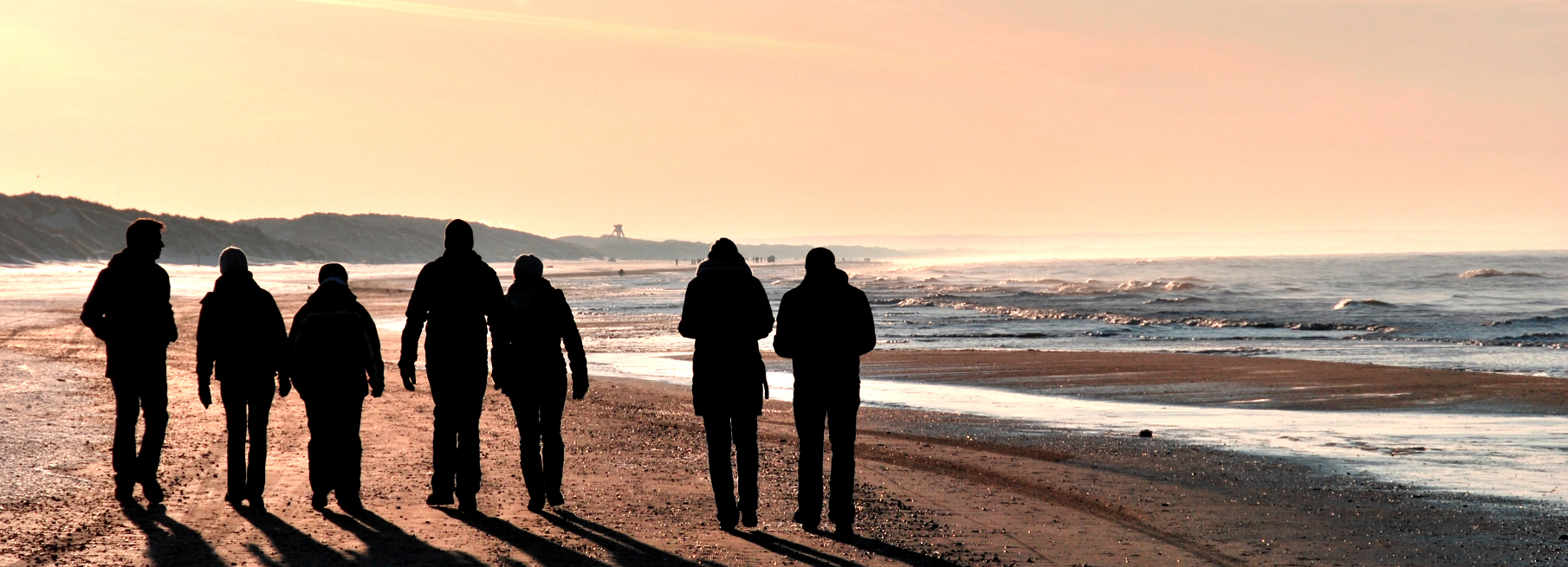
On the first day of Rosh Hashanah, many in the Jewish faith participate in the custom called Tashlich, or Tashlikh, to cast away sins and misdeeds. This practice takes place each fall on Preston and other North Shore beaches; some of you may have participated, while others may have wondered what is going on.
This year, Rosh Hashanah is Monday, September 26, 2022, and marks the first day of Tishrei, in the Hebrew calendar for the year 5783. I asked Rabbi David Meyer from Temple Emanu-El and Rabbi Michael Rogozin from Congregation Shirat Hayam to help us better understand this custom. Both rabbis’ explanations are included in full, despite the repetition of some information between them, in order to honor the minor differences in philosophies.
From Rabbi David MeyerTemple Emanu-El, Marblehead
The custom of Tashlich is performed on the afternoon of Rosh Hashanah, the Jewish New Year. The word, tashlich, literally means “casting away” and refers to the ritual of going to a body of water and casting crumbs of bread as a way of symbolically ridding ourselves of the past year’s misdeeds. Some see the custom as rooted in the Biblical text from the prophet Micah: “You will cast all of their sins into the depths of the sea” (Micah 7:18-20).
The early history of Tashlich was two-fold. First, early Judaism took over from even earlier religious cultures the belief that prayers recited near water are especially effective and can reach God more readily than at other places. In addition, we find from early times through the Middle Ages, and even, in some places, well into the Enlightenment, people would offer gifts of food to the “spirits” they believed to be dwelling in the river or lake near their town. If they considered it a friendly spirit, it was an expression of thanks for its favors. If it was an evil spirit, the gifts were intended to appease it. The practice of tossing food into the water as a gift to the demons which lived there was regularly condemned by the rabbis, of course. But that never stopped the people from continuing to do so, believing that such practice might bring them good fortune for the New Year.
Given the opposition of the rabbis of old to the custom, there is no special prayer or established ritual for Tashlich. Yet the custom has taken on more palpable spiritual meanings in our times. It is a reminder that Rosh Hashanah is a time for new beginnings, of release from the “crumbs” of the past year’s regrets. And even though we are aware of the superstitious origins of this custom, I think it is authentic and valid for us, particularly as adults, to recognize and to admit that, indeed, there are demons that are abundant in our own lives which can lead us to the missteps and mistakes, regrets and failings that we hope to toss into the depths of the waters.
True—the demons don’t live at Preston Beach, or in the depths of the ocean, lakes and rivers around us. But they do exist. They live in every one of us, and I can name some of them for you, even though we each have our own private assortment. Their names are Arrogance and Selfishness. Prejudice and Ignorance. Jealousy and Addiction. Impatience and Egotism. Suspicion, Fear, Apathy and Doubt. These are the demons that lead to the very sins we hope to discard as crumbs of bread are tossed into the waters.
Anyone who might be at the beach as the congregations gather would be most welcome to join in the casting of regrets, and to say to those demons: “BE GONE”!
From Rabbi Michael Ragozin
Congregation Shirat Hayam, Swampscott
What is the history of the Tashlich ceremony?
Tashlikh, “casting,” is the ceremony of tossing bread into a body of water, symbolically casting off one’s sins. This is derived from Micah 7:19, “God will take us back in love; God will cover up our iniquities. You will hurl all their sins into the depths of the sea.” It takes place on the first day of Rosh Hashanah. When the first day falls on Shabbat, it is postponed until the second day.
The origins of Tashlikh are shrouded in mystery. The earliest direct reference to the ceremony appears in Sefer Maharil by Rabbi Yaakov Moelin (Germany, c. 1360 – 1427). He approved of the custom of going to water, but forbid the practice of throwing bread into the river. This attests to the observance of Tashlikh prior to Rabbi Moelin and to the concern that it reflects a false act of propitiation, undermining the true processes of repentance.
Today, Tashlikh is symbolic, not superstitious. Individual experiences of Tashlikh vary from the solemn to the playful. For many, the combination of place (at the beach), community, and a tangible ritual offer a meaningful additional practice to the High Holy Day sanctuary rites, inspiring reflection, aiding the process of atonement, and connecting us to something greater than ourselves.
What time of day and what date do Jewish people perform Tashlich?
Tashlikh is performed in the afternoon on the first day of Rosh Hashanah. When the first day falls on Shabbat, it is postponed until the second day. Some, including Sephardic Jews (Jews of Mediterranean and Middle Eastern descent) and a number of liberal Jews perform the ritual on Shabbat.
Why is the ceremony at the ocean or at a body of running water?
Based upon the verse in Micah 7:19, “You will hurl all their sins into the depths of the sea,” the ceremony is performed at a body of water.
Is there a special prayer for Tashlich?
Yes. Micah 7:18-20 is recited before throwing the bread into the water and some add Jonah 2:3-8. Afterwards, selections from the Prophets (e.g., Isaiah 11:9, 54:9-10) and Psalms (e.g., 33:1-22, 118:5-9) may be added.
Can people join the Tashlich ceremony if they are at the beach?
Yes.
We hope you learned some interesting facts about this custom that occurs yearly on Preston Beach and other beaches all over the North Shore!

Shifting Sands
Lynn Nadeau
A long time ago, there was a high bluff overlooking the sea right where our park is now.
The people who lived here were a tribe we call "Naumkeag." We know they fished and eeled, hunted and picked to feed themselves and their kin. They could stand on the bluff and look at the sun rising over the water.
When the colonists came, these earlier inhabitants died of diseases brought from Europe and were mostly exterminated; they scattered, leaving the new people to fish and eel, to stand on the bluff and watch the sun rising over the sea.
Years passed and many more people moved to this high bluff overlooking the sea; they established fishing villages, farms, and summer homes. Still the beach bluff welcomed all viewers to appreciate the moving waters, clear skies, and trees and animals.
And then, during WWII, when the nearby small airport in East Boston was expanded, a need for fill brought trucks to the beach bluff. Carving out loads of sand and trucking them to Winthrop, the sand was relocated, tamped down and settled in.
So when you stand at the Beach Bluff Park, see if you can feel the years of change.Or maybe just stare out at the unchanged horizon dotted by three lighthouses and some boats.

Shorebirds Impacted by Avian Flu
Dan, Proulx, Massachusetts Wildlife Rehabilitation Permit Holder, with contributions from Sheryl Levenson
The avian flu has been an issue for bird populations on the North Shore since early spring, mostly impacting waterfowl such as eiders, mallards, geese, and cormorants. Hundreds of eiders (primarily ducklings) have washed ashore deceased, and if not deceased, many exhibited seizure-type symptoms such as shaking, head ticks, and disorientation. Sadly, they would die, usually within 24 hours. There is a small timeframe after exposure to when the bird dies. Around a week after, many seagulls will turn up in residential backyards unable to fly. Within twenty-four hours, they died as well. I have picked up two juvenile red-tailed hawks in Beverly and a peregrine falcon in Lynn that all tested positive for avian flu. Even though it has tapered off in recent weeks, it is still out there and flare ups in cases are possible. Hopefully the worst is over.
If you encounter a possible avian flu situation, the best thing to do is call local animal control or a wildlife professional. Unfortunately, they can be extremely overwhelmed; it is difficult for them to be everywhere at once, and the facilities are limited for bringing in a bird with avian flu. Tufts Wildlife Clinic has really been the only place to bring a bird with avian flu symptoms, but it is quite a drive, making it is difficult to run multiple calls for birds. Unfortunately, there have been many times the best thing to do is let nature take its course.
If you do attempt to recover a bird with avian flu symptoms, it is most important to wear gloves and a mask. Wildlife professionals will also use disposable aprons and shoe coverings. It is also important to remember where to step, especially when you are so focused on handling the deceased bird. Contamination of the bottom of shoes from stepping on bird droppings is probably the biggest contributor to the spread of avian flu. A good trick is to put plastic grocery bags (or something similar) on your shoes before stepping in a contaminated area. Another rule of thumb is to triple bag any deceased animal. Lastly, make sure the wind is not blowing towards you while handling and disposing of a bird that has passed due to the avian flu.
Shout Out to Our Summer Agents
Krissy Sgambellone
We are incredibly thankful to the agents and agent manager Mike Lavender who kept the parking lot up and running throughout the summer beach season!
Alex, Brady, Collin, Ella, Francesca, Kate and Shea spent Memorial Day through Labor Day greeting members and visitors at the entrance of the parking lot and managing the parking permits. We also welcomed two new agents, Emily and Caroline, as the season came to a close. During their less busy moments, you likely saw our agents keeping up with their summer reading or just relaxing in the sun. Some of the agents are off to college, some have headed back to high school, and some may be taking other steps toward life's next adventure.
Regardless of their path, we wish them well and hope to see them next summer