

CIA Brief | 2025 Spring
President’s Memo
Charya Peou
President@ciabeachbluff.com
A new season is upon us, and it brings us closer and closer to the best season, summer! Please be on the lookout for an email to renew your membership. It should hit your inboxes at the end of March. If you login before then, you will be prompted to renew.
Due to popular response, we’ve decided to extend our plank sale through opening day on May 25. Click here for more information on how to secure your plank and honor a loved one!
Speaking of opening day, our annual opening day celebration will take place May 25 at the Sun Circle at Beach Bluff Park. Come out and enjoy some refreshments and engage with our board to learn more about our mission and how you can contribute. We look forward to seeing you there!
Love is (Still!) in the Air
Sheryl Levenson
Although Valentine’s Day is over, spring is around the corner, and we all know that love is a 365-day-a-year event. In anticipation of the new growth just around the corner, I thought it would be interesting to see how some of our wildlife celebrate their affection for each other. Some of these behaviors might not be readily apparent, or if they are, we might not understand their meaning. Maybe you can get some ideas for next Valentine’s Day! In the meantime, any day is the right day to show some affection, kindness, and love for your friends, neighbors, and family in your own way. Note: The following information was sourced from the Woods Hole Oceanographic Institute website.
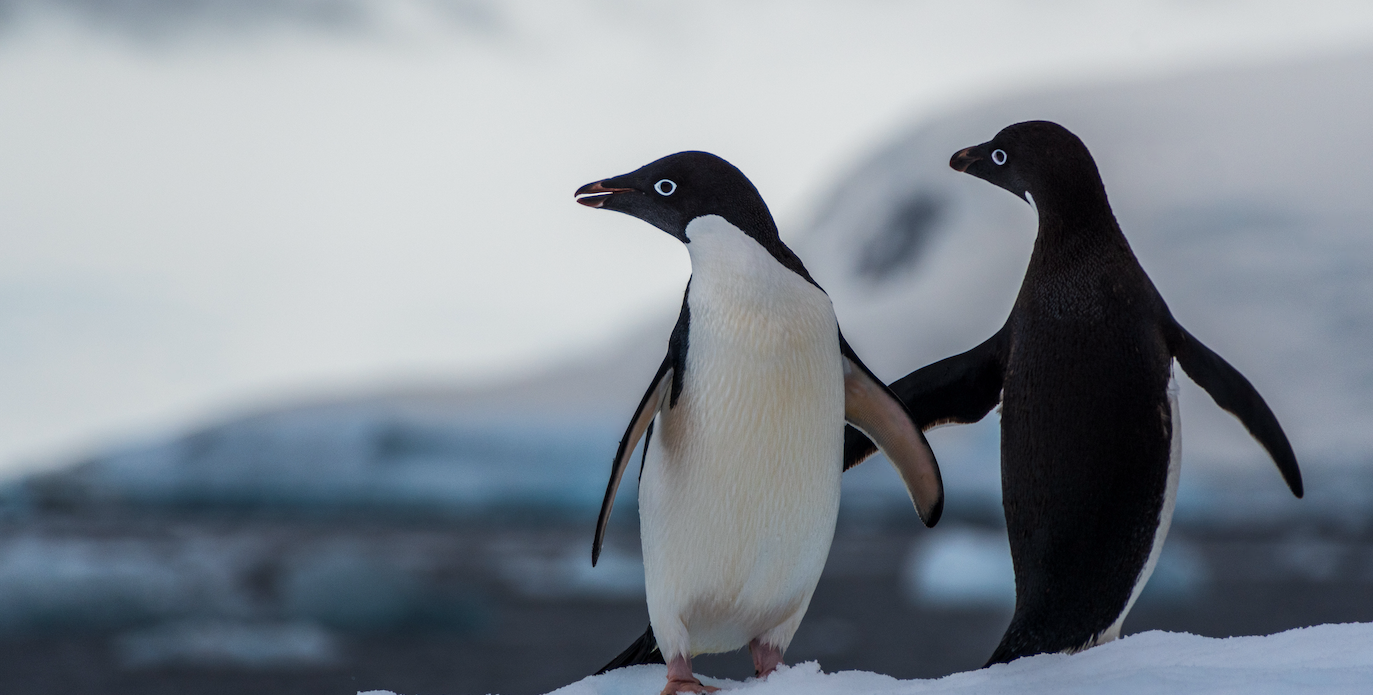
The Adélie penguins live on the Antarctic ice surviving very harsh conditions. But to show his love to a partner, and to show he would make a good dad, a male penguin will search the terrain for pebbles and use them to make a small nest in the hopes of impressing a mate. If he succeeds, the couple will bow to each other and begin a relationship that might last for the rest of their lives.
A large tropical seabird called a masked boobie will also offer gifts of pebbles, in addition to coral, sticks, and vegetation, all of which are used to build the couple’s nest. If the male really wants to make an impression, he might pull out his own feathers as an offering.
Wanna dance? Even though the albatross spends most of his time in the air, he will perform intricate dances with multiple moves to attract a mate. (Other bird species such as the rare bird of paradise will also do this!) When it comes to sea creatures, the male pygmy seahorse will also dance to attract a female. To win their mate, they engage their potential partner in a sophisticated underwater ballet. When the rhythm is right, the female transfers her eggs into his dedicated pouch where the father will foster them until they hatch!
Black vultures and prairie voles demonstrate their love simply by spending as much time together as possible and showering their respective mates with affection. They care for their families equally.
While you may want to spend time alone with your loved one, wolves and coyotes prefer always being with family. They remain close-knit, and they all help each other. They remain devoted to each other for life.
Japanese pufferfish create their own art gallery. The males create artwork on the sea floor by flapping their fins to create circular patterns in the sand, which can take about 10 days to complete and may measure 7 feet in diameter. This is hard work for a 3-5-inch fish! But it doesn’t stop there: the suitor may also decorate the edges of his design with items from the ocean such as shells and pieces of coral. His masterpiece complete, he will then wait patiently for a female to admire his work and seek him as her mate. Watch this video (source: PBS Learning) to be mesmerized as you enjoy their creation.
These are only a few examples of affection and devotion that exist throughout the animal world. All they ask is that they be left to live their lives in peace.
Spring Equinox 2025
James Keating
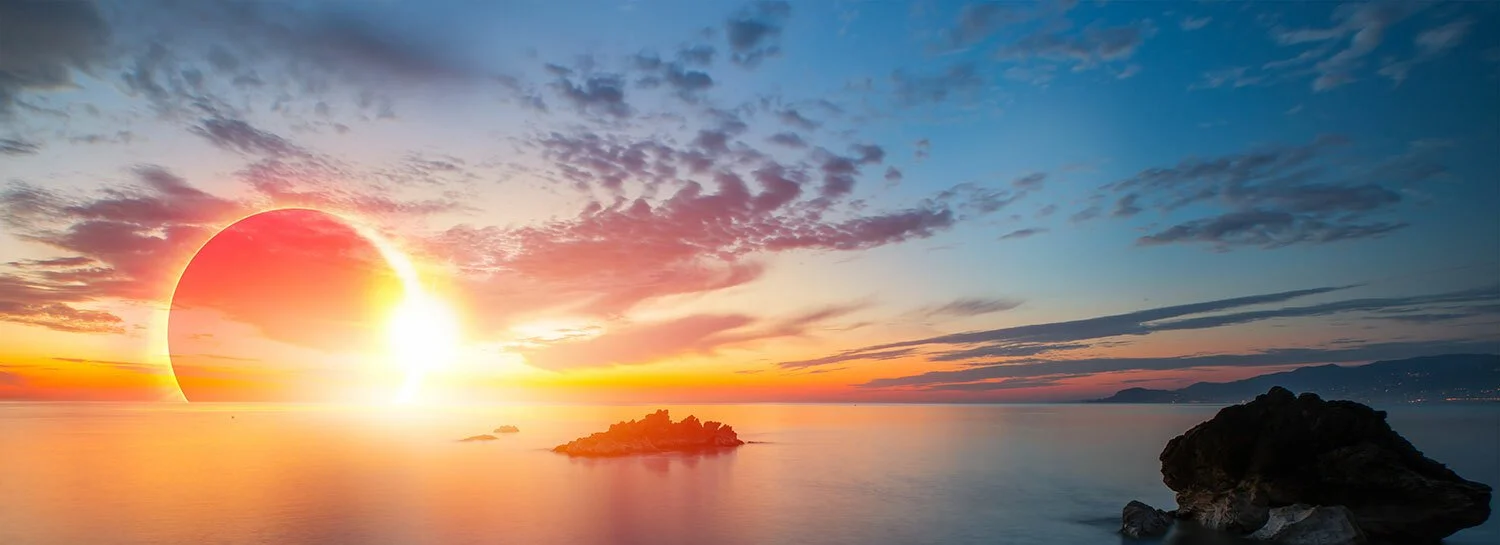
The beginning of spring is what some people call it, but it should be called by its proper name: the Spring Equinox. This year, it occurs on March 20 at 5:01 a.m. EDT. In some years, it occurs on March 21. What really happens at this time each year?
The Sun always travels along the line called the ecliptic (a.k.a., the Road of the Sun). “Winter” is the time when the Sun is well down on the southern part of the ecliptic, causing more sun to shine on the southern half of Earth. On the Vernal (Spring) Equinox, the Sun comes to the place where the ecliptic crosses the celestial equator. The celestial equator is overhead, above Earth’s equator, and the Sun shines equally on both halves of Earth.
As we all notice, the amount of “daylight” is increasing at this time of year. This is why on March 9, we (most of the U.S.) moved our clocks ahead one hour. This is what lawmakers decided we do, and it is called Daylight Saving Time. It doesn’t save any daylight, so it is a misnomer. Since the Sun doesn’t follow this convention, noon is when the Sun is at its highest point in the sky; Standard Time is about the same as natural time, and you can tell this is true from the Sun. So, we will have to wait until the first Sunday in November to get back to Standard or Natural Time.
I believe the best description of Daylight Saving Time was given by a wise Lakota Sioux Sachem. When told how it worked, he said it didn’t make any sense. He said it was like “cutting the top of a blanket off and sewing it to the bottom of the blanket.”
Please join us on Thursday, March 20 at 6:46 a.m. to watch the sunrise over Preston Beach in Swampscott at Beach Bluff Park. The ceremony will be led by Lisa Kawski and Kampa Vashi Deva at the Sun Circle.
Sightings: Seals!
Juilanna Thibodeaux
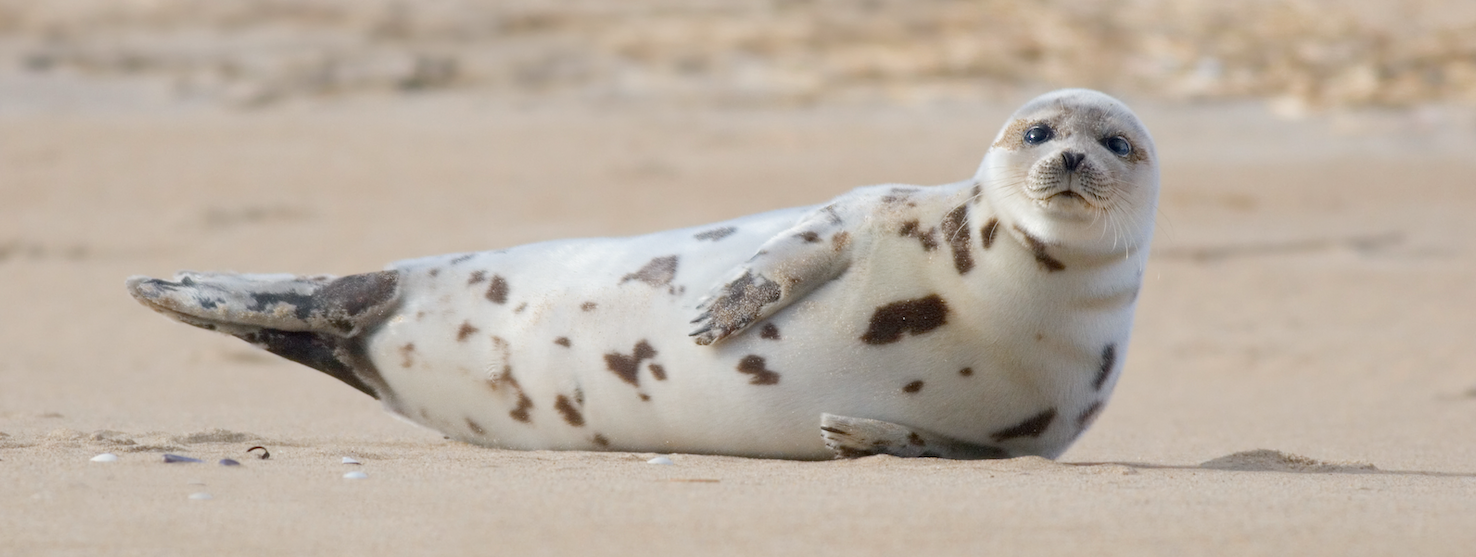
Harbor seals and gray seals are year-round residents of North Shore coastal waters. While you may not have spotted one yourself (yet), their numbers are growing, and sightings are increasing. As a frequent beach walker, I’ve occasionally spotted one myself; and when I have, they’ve typically been in the water rather than on the beach. The first time I spotted one off Castle Rock in Marblehead several years ago, I thought someone’s black lab was out for a swim. Their dark heads and whiskers can fool us, but dogs don’t typically dive for fish!
I’m not alone in my seal sightings: According to the Center for Coastal Studies in Provincetown, Mass., “Over the past thirty years, gray seals have repopulated southeastern Massachusetts where they once were present prior to seal bounties. This expansion in their range along the Northwest Atlantic has led to a greater number of seals present in our local waters.” Anyone who visits the Cape has likely seen these seals in large numbers, but here on the North Shore, their numbers are also increasing.
If you do spot a seal, it’s likely a harbor seal or gray seal, the species most common to the Stellwagen Bank. Ecosystems are changing all the time, and species often migrate to new habitats in search of food sources or they may attempt to repopulate former habitats after being overhunted by humans.
Gray seals are native to the North Atlantic, all the way from the Northeastern United States through Canada and as far away as the Baltic in Western Europe. Highly gregarious, these seals “haul out” (rest) in large groups on beaches. Because their numbers are growing in our area, scientists are trying to determine if this is due to a growing Canadian seal population or other environmental factors.
Harbor seals are the smaller of the two species that are common to our area, typically growing to around 5 feet in size, while gray seals can grow to 8 feet and weigh over 800 pounds. Female harbor seals pup (give birth) in late spring and early summer, so don’t be surprised if you spot a baby seal in the coming months. Pups can swim within minutes of birth, and occasionally they can be found resting alone on the beach while their mother searches for food; but this doesn’t necessarily mean they are lost or abandoned. It is crucial not to disturb them in this case, as human interference can cause mother to abandon child. But no matter which type of seal you might happen to encounter, as with all wildlife, do not disturb! Give them space, and please also keep your pets away. Just like our canine friends, seals not only bark, but they will bite if they feel threatened.
If you do happen to spot a seal, we welcome your photos (taken from a distance, please!) for future newsletters and social media posts. See you at the beach!