

CIA Brief | 2023 Summer
President’s Memo
Kelly Upham
As we welcome in summer, I hope everyone has time to enjoy our beautiful spot here on the North Shore!
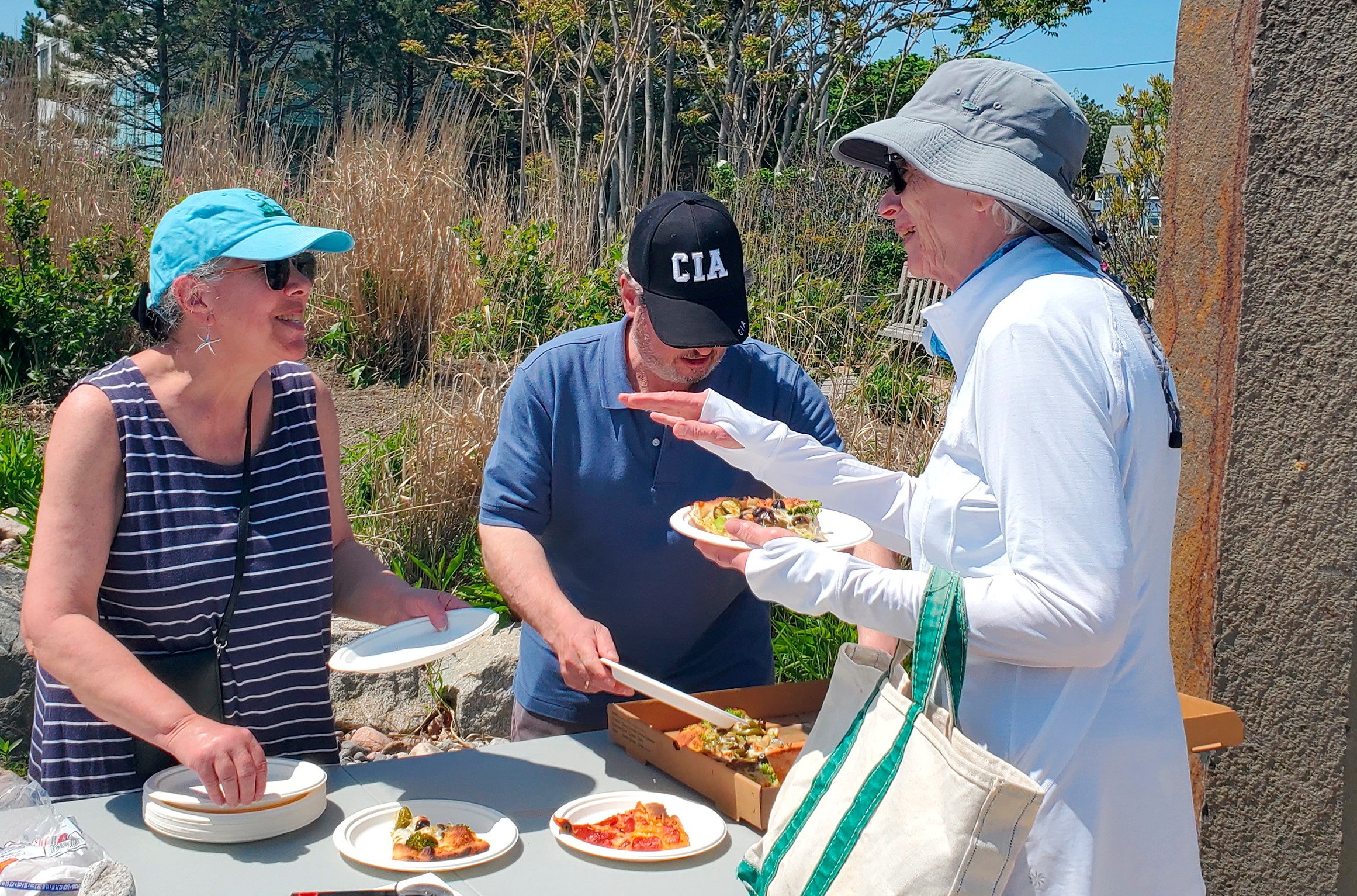
We hope you were able to stop by the park opening weekend for a slice of pizza and cookies. We had a great turnout, and the weather was perfect.
If you’ve already been to the lot, you may have met one or more of our awesome summer agents. In addition to happily welcoming back most from last year, we also welcome Dan who has joined the team. The agent on duty during lot hours will have the list of those who have already joined or renewed, so please remember to pick up your stickers there (we do not mail them out).
Many of you have, at one time or another, taken advantage of our annual holiday plank sale in December. This year, in honor of Father’s Day, we would like to offer the same $50 discount on planks purchased in June. Proceeds support the operation of our organization and its important mission. We hope you’ll visit our website to initiate that process!
Enjoy this Summer Edition of the CIA Brief, and as always, please feel free to email the newsletter team with any article ideas you may have for future newsletters: VicePresident@ciabeachbluff.org.
See you at the beach!
CIA Opening Day Celebration - Sunday, May 28, 2023
Roberta Chadis
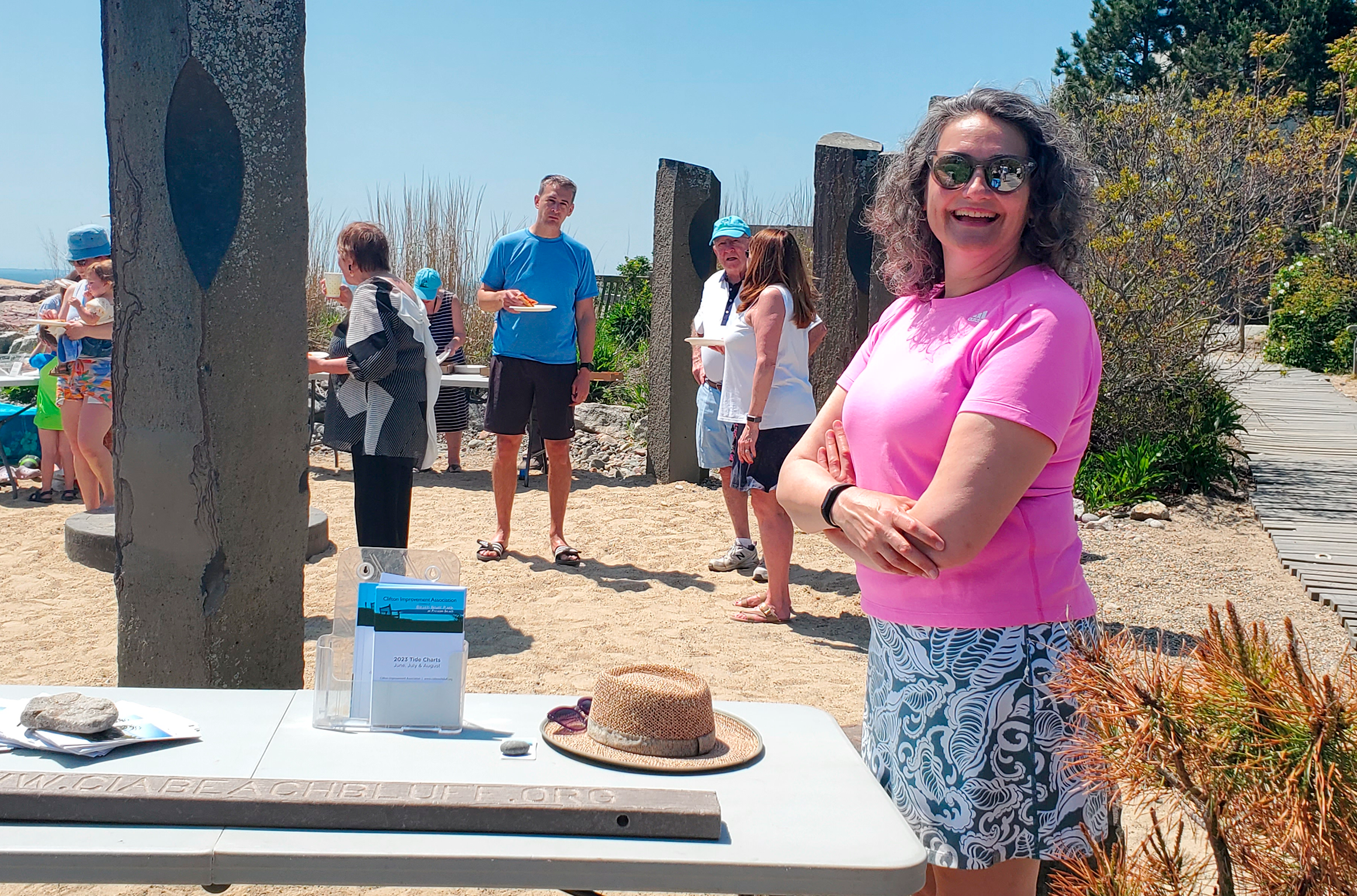
We could not have asked for a better way to start the summer season at Beach Bluff Park. There were no clouds and no wind, and the temperature was in the 80’s, with a constant stream of people from the community with their friends and families heading down to Preston Beach. How wonderful to see so many happy faces, and a fashion show of bathing suits along with pails and shovels, coolers, and beach chairs.
The CIA provided pizza donated by Bertucci’s, which we all much appreciated. Lemonade, Kool-Aid, and assorted cookies were served, too. Judging by all the “thank you” comments, we knew everyone was enjoying these treats.
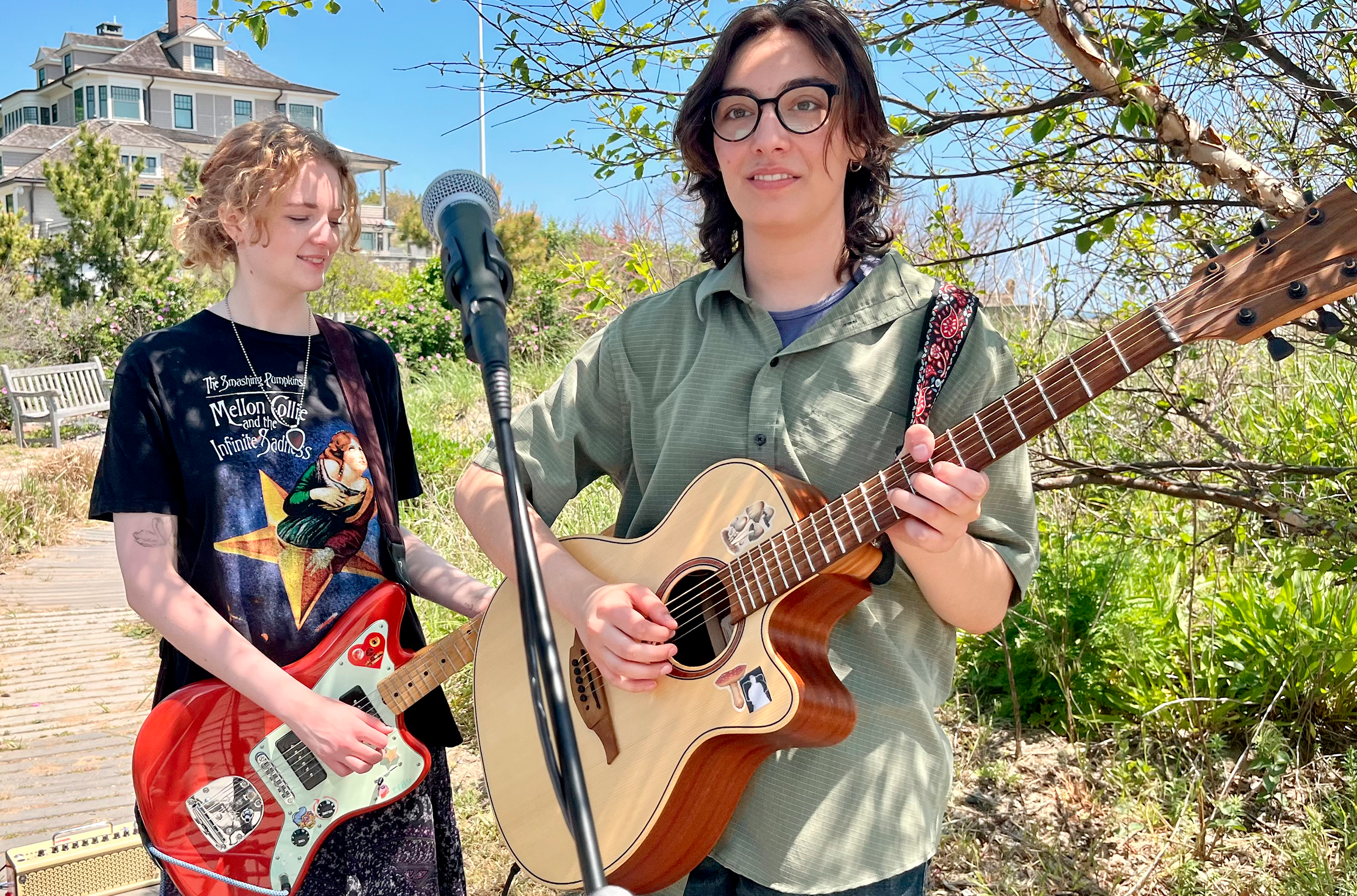
A first for our annual event, we added live music this year with the guitar-and-vocals duo Alex Thibodeaux, one of our returning agents, from Marblehead, and Liv Nason, of Framingham. Alex and Liv are students at Berklee College of Music in Boston, and both are members of the four-person band Ted Rabbit, which is growing a following in and around Boston. You can follow Ted Rabbit on Instagram: @tedrabbitband. So nice to have young artists perform. We hope they will come back often!
Pictures like these tell the story much better than words. We are grateful to be a part of the team as caretakers for the park and wish everyone a safe summer with lots of fun at the beach. Many thanks to the agents in the parking lot who will give out parking stickers to paid CIA members or sell new ones; they’ll be working all summer through Labor Day Weekend.
If you are interested in hosting your own event in the park please contact president@ciabeachbluff.org.
Little Free Library
Kristen Nyberg
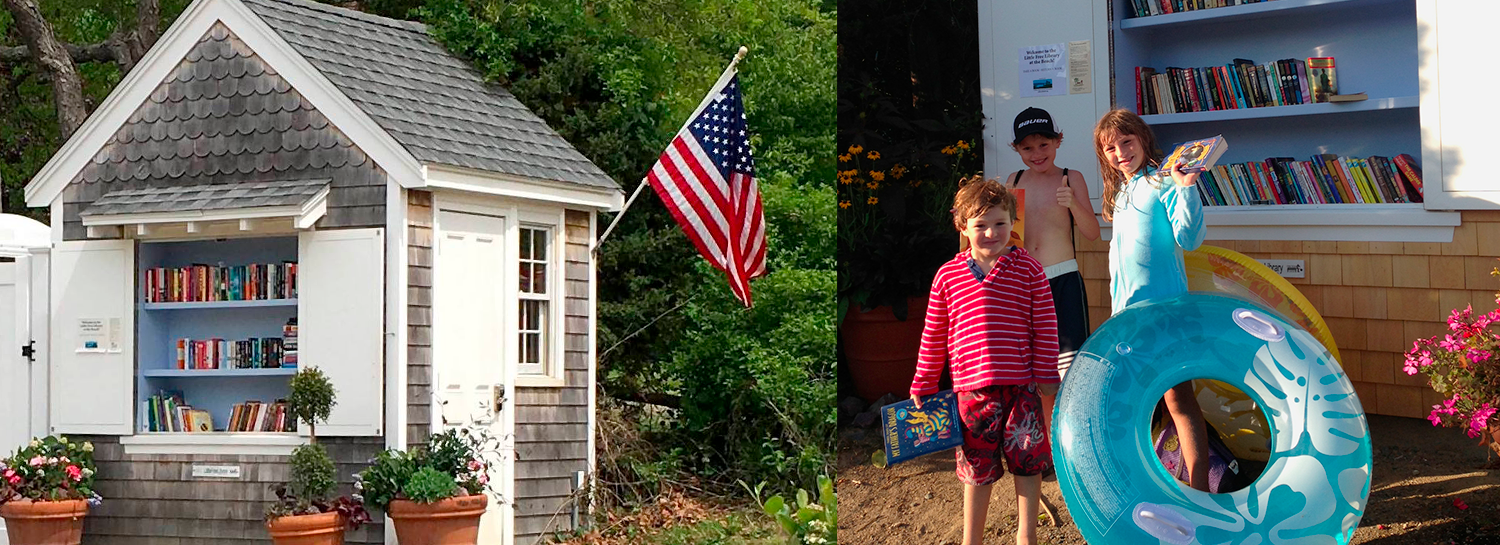
This summer will be the CIA's ninth year of hosting a Little Free Library. Time flies when you've got a great book to read! We built the library in 2014 when the new shed was constructed, and it has been popular with neighbors, locals, and beachgoers ever since. We are grateful that the community is so involved! We wanted to share information about it for those new to the area and offer a few reminders to all on how it operates.
WHAT IS A LITTLE FREE LIBRARY?
A Little Free Library is a free book exchange, designed to promote literacy and a love of reading along with a sense of community. It belongs to everyone, and everyone can use it!
TAKE BOOKS
If you see something you would like to read, take it! When you’re finished, share it with a friend, bring it back here, or leave it in another Little Free Library. Please do not take more than one or two at a time. We have had instances of entire shelves being wiped out by one person, especially children's books. And please do not use them for resale, as that defeats the purpose of a free community resource.
GIVE BOOKS
It’s up to everyone to keep this Library full of good reads! Bring books to share when you can and continue being a friend of Little Free Libraries everywhere. We try to keep the bottom shelf for younger readers: children's books on the left and young adult books on the right. We do have a small amount of space for backstock in the shed. If the shelves are full, speak to the agent on duty at the lot and they can take your book donations to be stored for restocking.
DONATIONS
We love that you love us! But please be respectful and don't use the library as your dumping ground. House cleanouts fill the shelves with books others aren't interested in and create extra work for volunteers. (Giant reference books do not make great beach reads.) Rule of thumb: If you wouldn’t buy it or give it to a friend, think twice about donating it here. Condition matters – would you take something that is moldy, dirty, ripped, or damaged? And please do not leave magazines, puzzles, CDs, or other media.
If you have bulk book or other media donations, here are some great places where they can make a positive impact on the community:
More Than Words: A nonprofit social enterprise that empowers system-involved youth to take charge of their lives by taking charge of a business. Find their drop box on the Salem State campus at this address:
Frederick E. Berry Library
Salem State University
4 College Drive, Salem
Lifebridge Thrift Shop
47 Canal Street, Salem
https://lifebridgenorthshore.org/locations/lifebridge-thrift-shop/
Abbot Public Library3 Brook Road, Marblehead (temporary location while library is undergoing renovations)
Donations of used materials are accepted on designated collection days for inclusion in the Friends of the Abbot Public Library Book Sales. Find donation days here: https://abbotlibrary.org/events/
Swampscott Public Library61 Burrill Street, Swampscott
Information on donating books can be found here:
https://www.swampscottlibrary.org/support-the-library/#bookdonation
Thank you so much for being an involved book-loving community. We hope to see you on the beach this summer with a good book!
Inside the Kiosk
Sandi Olivo
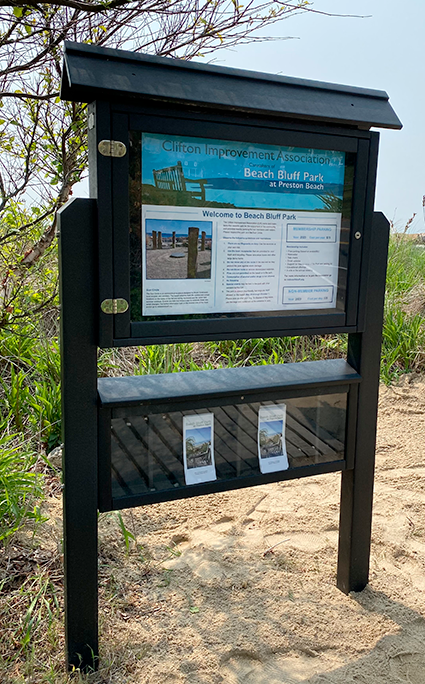
Check out the new posters welcoming visitors to the park and parking lot! Thanks to the collaborative effort of board members and volunteers, we have newly designed posters in both kiosks and new plexiglass on the front side of the park kiosk. Soon you will see our new poster on the back side of the park kiosk with additional information about the Sun Circle sculpture, including diagrams and pictures.
While you’re at the park, if you didn’t do so at our Memorial Day weekend event, make sure to pick up a new Summer 2023 Tide Chart to help plan your beach days or daily low-tide walks. We also invite you to pick up an informational brochure on the CIA and pass it along to potential members.
Finally, help us keep our kiosks clean. Please do not deposit debris or other refuse inside them; either take your trash home with you or deposit it in the curbside barrels. Better yet, recycle whenever possible.
What About Seaweed?
Sheryl Levenson and Julianna Thibodeaux
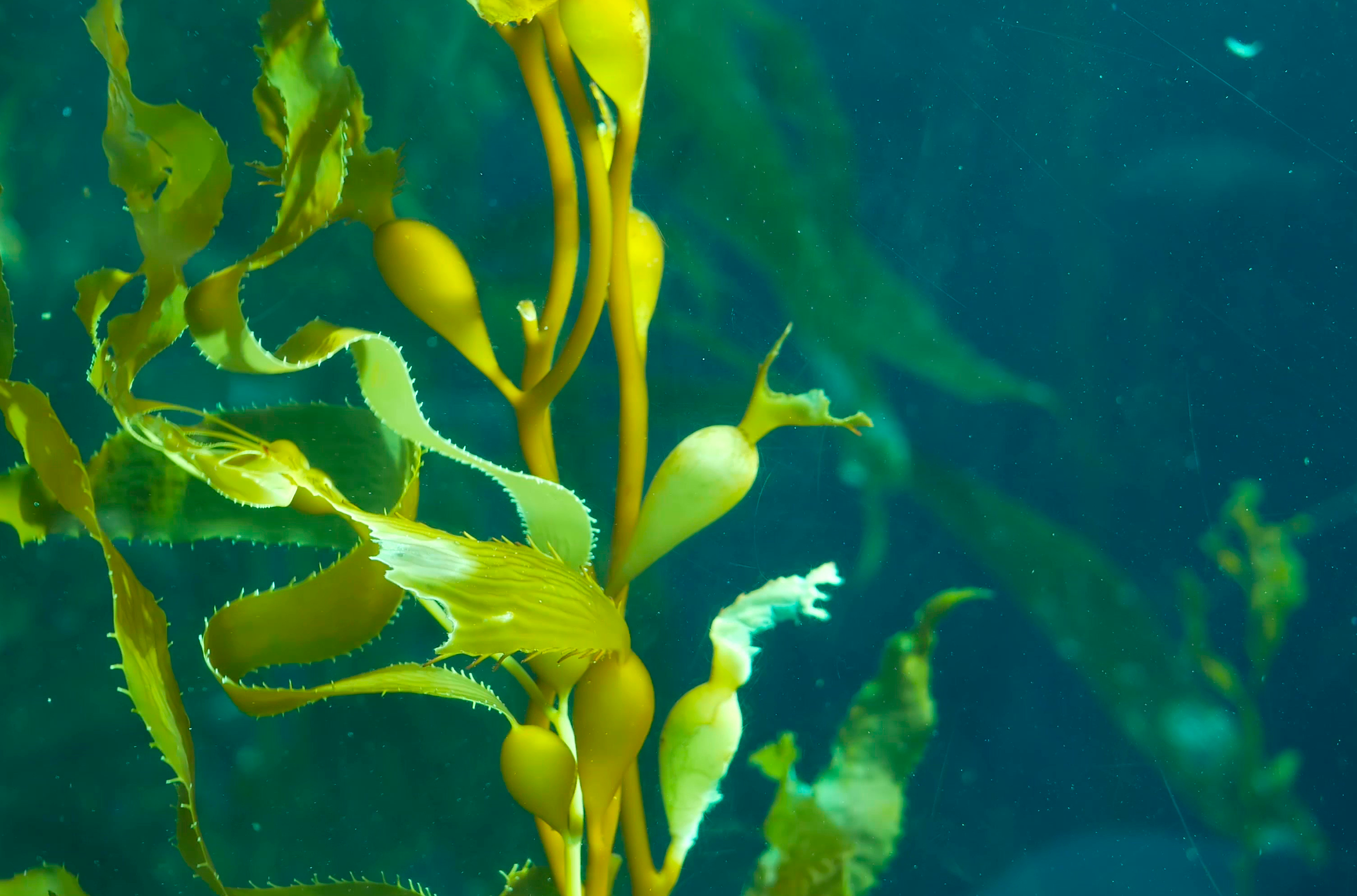
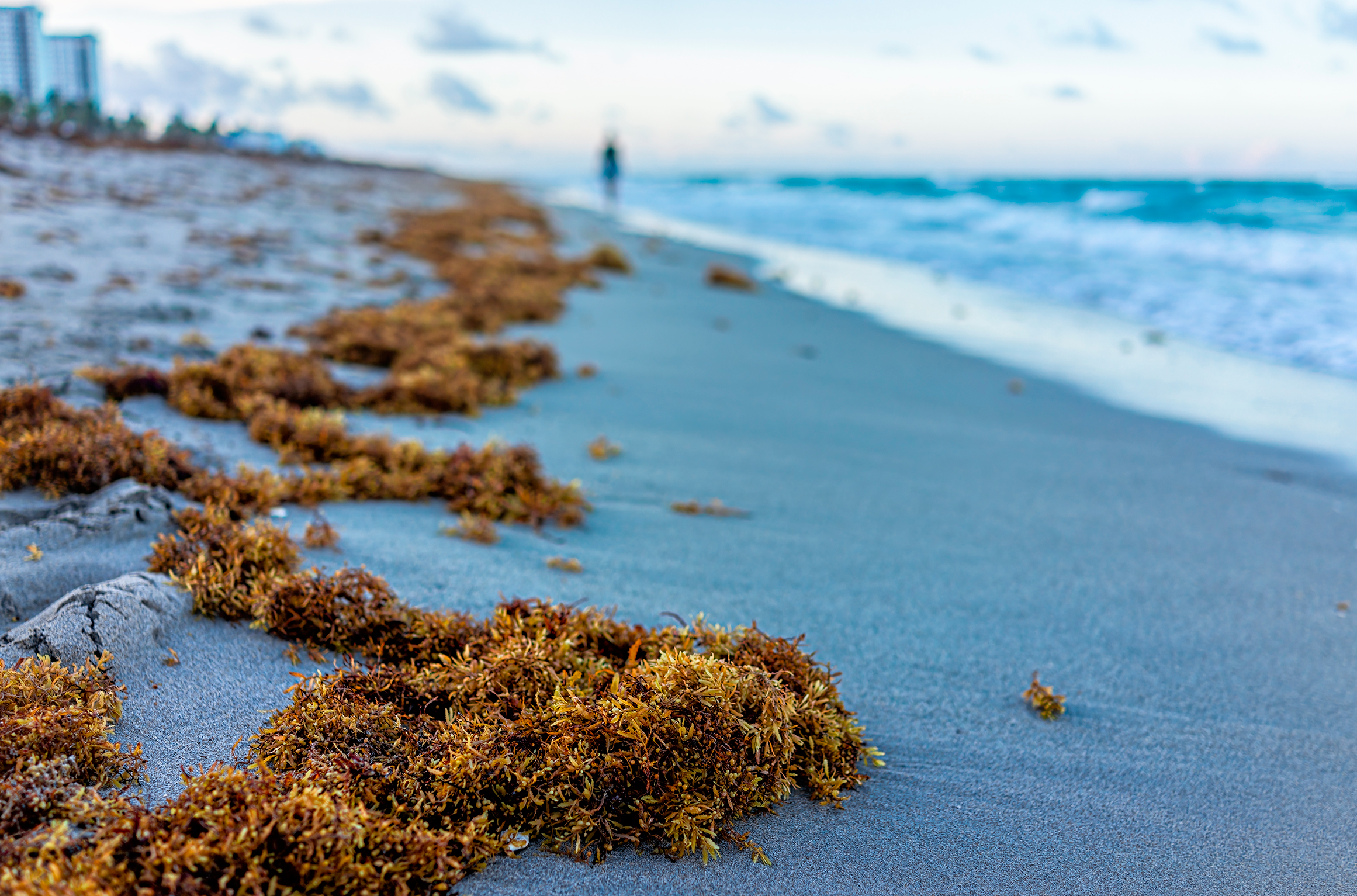
Seaweed: It’s not really a weed, but algae. Yet we think of these ribbons of plant material as “weeds,” because they are so obliquitous on our shores. According to the New World Encyclopedia, “Seaweeds are macroscopic, multicellular, marine algae. They are generally benthic, being anchored to the bottom of the ocean or to solid structures.”
They’re not really plants, either; but rather, these algae comprise a “large and diverse group of photosynthetic, eukaryotic, plant-like organisms that use chlorophyll in capturing light energy, but lack characteristic plant structures such as leaves, roots, flowers, vascular tissue, and seeds” (New World Encyclopedia). And they are old. As in, as old as time. Thought to have originated around 3.5 billion years ago, they’re classified in the kingdom Protista, rather than Plantae.
Seaborn algae can be good, and they can be toxic, as news reports with glaring headlines of “red tide” algal blooms warning of dying fish and sea mammals have shown us in recent years. But more often, and in the correct ecological conditions, seaweed is important to ecosystems and an excellent natural resource for all manner of living things: “Various seaweeds serve as a habitat and food for other sea creatures. For humans, seaweed also can be used as food and as fertilizer. Red algae are a source of agar, a gelatinous polysaccharide that is used as a culture medium for microbiological work, as well as vegetarian gelatin substitute, a thickener for soups, in jellies, ice cream, and so forth” (New World Encyclopedia). And so much more – from medicinal and pharmaceutical to commercial-industrial uses such as adhesives, dyes, and even explosives.
Seaweed can also be grown “in captivity,” and such farms are in plentiful supply in New England. According to the Woods Hole Oceanographic Institute, “Seaweed farming is a huge global business valued at $6 billion... Around New England there are perhaps 40 – 50 farmers of all sizes and experience levels working small ocean plots of a native kelp species, Saccharina latissima, right now, with Maine at the forefront of regional production.”
The three major types of seaweed include green, brown, and red; and we often see each of these on our beach. You’ve likely tripped over dulse or skirted sea lettuce, marveling at its bright green color in early spring. You won’t find nori, but that’s the one you most likely consume, thanks to the worldwide love of sushi. It happens to contain high levels of Vitamin B12.
As in all eatables harvested from the wild, proceed with caution; mistakes can be costly. But don’t forget to marvel at its beauty and its importance in our seacoast ecosystem.
Summer Solstice
James F. KeatingThe Marlinspike Sailor of Marblehead
The summer solstice is an astronomical event that occurs annually in June. It marks the longest day and shortest night of the year in terms of daylight hours. In the Northern Hemisphere, where most of the world's population resides, the summer solstice takes place around June 20 or 21. However, in the Southern Hemisphere, it occurs around December 21 or 22.
During the summer solstice in the Northern Hemisphere, the Sun reaches its highest point in the sky, appearing directly overhead at noon along the Tropic of Cancer (approximately 23.5 degrees north of the equator). This phenomenon happens because Earth's axis is tilted with respect to its orbit around the Sun. As a result, sunlight is more concentrated on the Northern Hemisphere during this time, leading to longer days and warmer temperatures.
The summer solstice holds cultural and historical significance in many societies. It has been celebrated and observed in various ways throughout history, often associated with festivals, rituals, and gatherings. In some cultures, people participate in activities like bonfires, dancing, and feasting to mark the occasion.
Midsummer
The summer solstice arrives this year on June 21. Since the winter solstice on December 21, the Sun has been traveling each day a little higher in the sky. On June 21, it reaches its highest point, providing the longest day of the year. Each day thereafter the amount of daylight will start decreasing until we reach the winter solstice, the shortest day of the year. Even though the amount of daylight decreases after June 21, Earth’s surface and oceans will have absorbed heat for the past six months and they will release it slowly. As a result, the weather continues to get warmer for the next six to eight weeks.
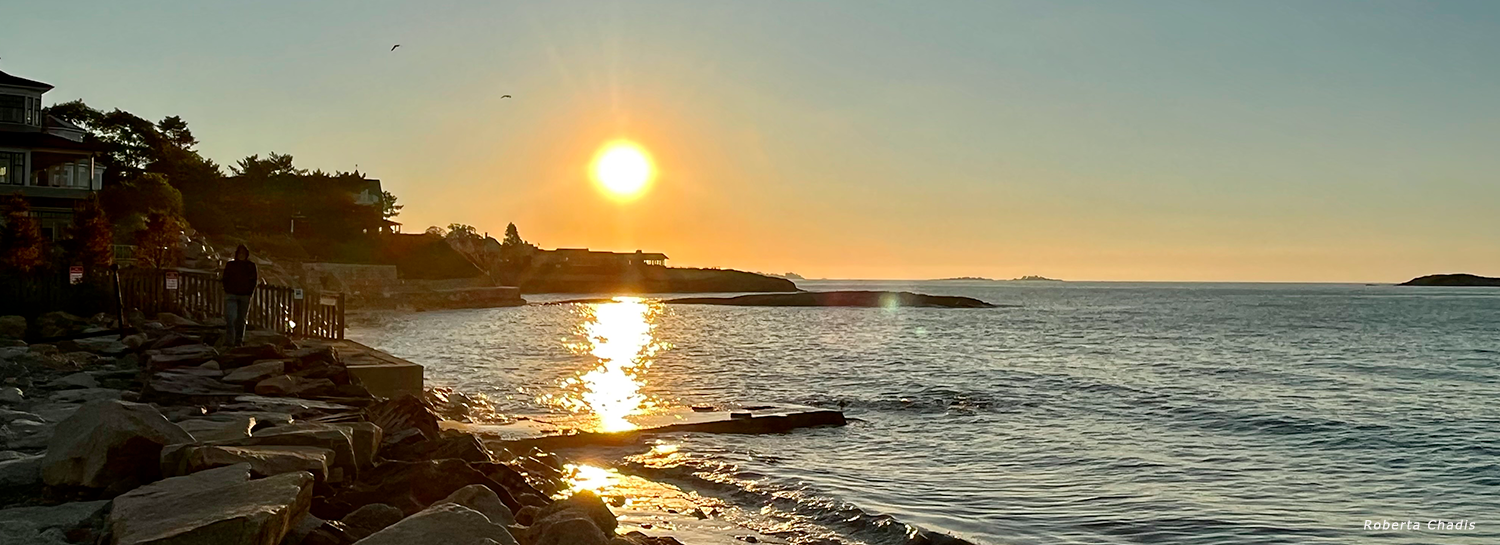
We hope you will join us for the Summer Solstice Ceremony at the Sun Circle at Beach Bluff Park on June 21 at 5:06 a.m. Come and watch the sunrise in community and welcome the official start of summer.
Excerpted from “Place Where You Live: Marblehead, Massachusetts,” Orion Magazine Online
Julianna Thibodeaux
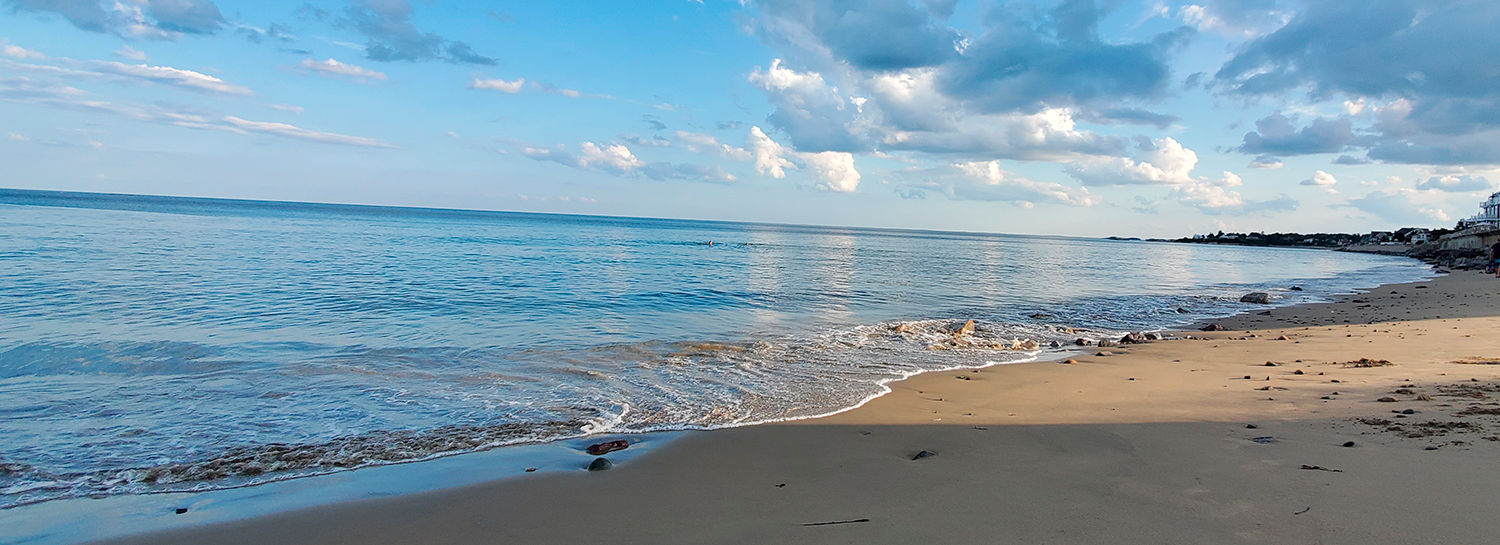
At low tide I descend the steps and remove my shoes. I walk barefoot across the expanse of sand and to an outcropping of smooth rocks painted with bird excrement, fossilized algae, and the black of time.
Someone has graffitied this ancient tabletop… I can’t escape the message—which is that nothing is sacred.
Who would look at this ethereal beauty—Boston’s shoreline to the south, ships and islands dotting the ocean’s brilliant blue expanse to the east—and mar it with profanity?
This is my paradise: here I witness plovers on their frenzied hunt where water meets shore, gulls vivisecting crabs and leaving their dirty dishes behind, the unfettered clouds exploding into brilliant tapestries. This is the natural order of things.
What isn’t natural is the verbal trash that won’t come clean when the tide and the waves come crashing in, and neither are the stray cans, pocked with rust; the ragged halves of balloons washed up from some distant celebration; the candy wrappers laden with wet sand.
I can’t stop the spray of toxic paint marring the ancient rocks, but I can remove what was carelessly left behind—and so I do.
SIGHTINGS
In this space, we print, reprint, or invite new reflections on our beach, park, and its environs. Board member Julianna Thibodeaux published her “Place Where you Live” reflection in Orion magazine online, shortly after returning to New England. Send your poetic reflections to VicePresident@ciabeachbluff.org, and we’ll gladly consider them for publication in a future edition of CIA Brief.
Avian Flu Update
Unfortunately, avian flu is still with us, mostly affecting waterfowl. Please remember to call local animal control or a wildlife professional if you see a bird in distress. Signs of illness include uncomfortable shaking, head ticks, and disoriented behaviors.
If one were to attempt to recover a bird with avian flu symptoms, it is essential to wear gloves and a surgical mask. Wildlife professionals will also use disposable aprons and disposable shoe coverings. The most important thing to remember, whether dealing with a bird that is alive or that has passed with avian flu, is where you step. Contamination of the bottom of your shoes from stepping on bird droppings is probably the biggest contributor to the spread of avian flu; many people will be so focused on handling the deceased bird that they are not aware of where they are stepping. A good trick is to put grocery bags (or something similar) on your shoes before stepping in a contaminated area. A rule of thumb is to triple bag any deceased animal, especially a bird that passed due to possible avian flu symptoms.
In sum: Gloves and a mask are a must, and an apron and shoe coverings are highly recommended. Lastly, be aware of which way the wind is blowing. You’ll want to make sure the wind is not blowing towards you while disposing a bird that has passed due to the avian flu.
Enjoy our beautiful beach, but please exercise caution when dealing with wildlife of any kind.