

CIA Brief | 2021 Summer
Did you know?
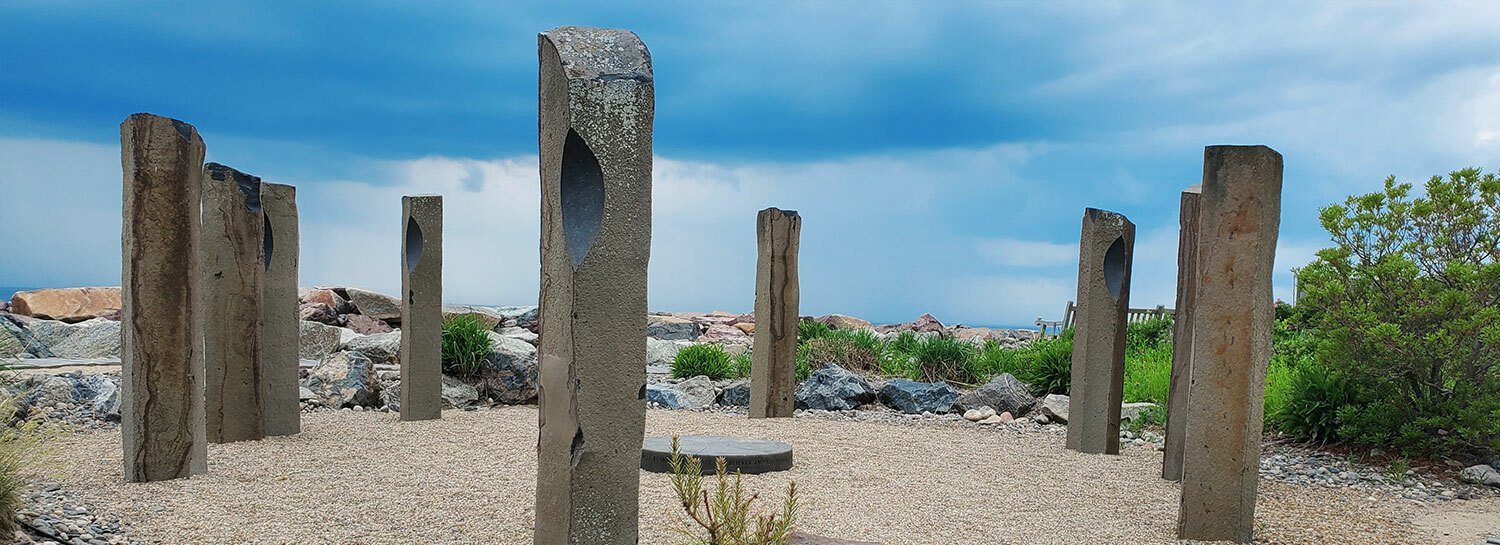
The Clifton Improvement Association (“CIA”) was founded in 1934 by summer residents who wanted to make Preston Beach available to all who lived in the area. In 1945, five families donated the land now used as our parking lot. It was in the early 90’s that the CIA became a charitable organization, which now extends membership to all.
Behind the CIA: A closer look at Clifton
Clifton is an unincorporated village within the Towns of Swampscott and Marblehead according to Wikipedia.
In 1634, the Mass Bay Colony gave a 350-acre strip of land “betwixt the Clifte and Forest River” to Attorney John Humphrey. The name “Clifton” came from the reference to Clifte and Humphrey Street was named after its first owner and is referred to as “daughter of the Neck.”
The remaining text is taken from an article written by Pam Peterson (at the time, the Director of the Marblehead Museum and Historical Society) posted on March 7, 2013:
Originally it was Naumkeag land, and it has always been a very desirable area. Bounded by the ocean on one side and the river on the other, it was filled with brooks, spring-fed ponds, meadowland and thick woods.
By 1665, Humphrey had sold his land to Moses Maverick, John Peach and others, and the area became known as the “Playne Farm.” It was used for farming and pasture for many generations. For well over a century, there was only a scattering of farmhouses and barns.
In 1870, Atlantic Avenue was built, which provided better access to Clifton. The train had also arrived, and suddenly Clifton and Devereux … became vacation destinations. Carriages, bicycles and “barges,” which were something like horse-drawn open buses, carried visitors to hotels, boarding houses and camping areas. The best known was Peabody Camp near Clifton Heights, where residents from Peabody set up a summer tent colony. Small summer cottages were moved from the Neck, earning Clifton the name “daughter of the Neck.”
Increased access, higher property values and a larger population made Clifton a distinct area. It also created a sense of resentment among the residents. They felt that their interests were being ignored by the town of Marblehead.
This resentment grew until 1884, when Benjamin Ware submitted a formal petition to the state of Massachusetts for the Farms and the Neck to secede from Marblehead and become a separate town. He cited poor treatment of the district, including few town improvements, no fire or police protection and no road repair.
Ware also complained that too many liquor licenses had been granted to hotels and boarding houses, stating, “The roads and shores are infested with disorderly persons who frighten ladies, children and the timid.” There was a lot of support for the petition and a lot of opposition as well. One can only imagine Town Meeting in 1884! Placards and posters abounded, and “Be-Ware” became the rallying cry.
Clifton did not secede, and it received more attention from the town. It also continued to grow in popularity as a summer resort area. More hotels, elegant summer homes and a golf course were built. The Clifton Heights Association ran a casino with a wide variety of activities for summer residents. This grew steadily until the end of the 1920s. The Great Depression marked the end of Clifton’s resort heyday.
The Depression also signaled the end of Sorosis Farm and the decline of farming in the area. Large areas of land became available for housing. So many families moved into the newly built homes that Glover School was expanded in 1949, and about 10 years later the Eveleth School, named after Dr. Samuel Eveleth, a longtime member of the Marblehead School Committee, was added.
Veterans housing was built on Broughton Road in 1949, named after Nicholson Broughton, captain of the Hannah of Revolutionary War fame. The Clifton Lutheran Church and Temple Emanu-El were established in 1954. Temple Sinai was built in 1962, with the Jewish Community Center built on adjoining land.
The landscape and character of Clifton had changed dramatically in less than 75 years. Ware and Oliver ponds remain, now conservation land. The railroad has come and gone, leaving behind the wonderful walking path. The brooks and farms and woodland are gone, replaced by streets and houses, churches and temples, schools and families that now define Clifton.
Summer Solstice
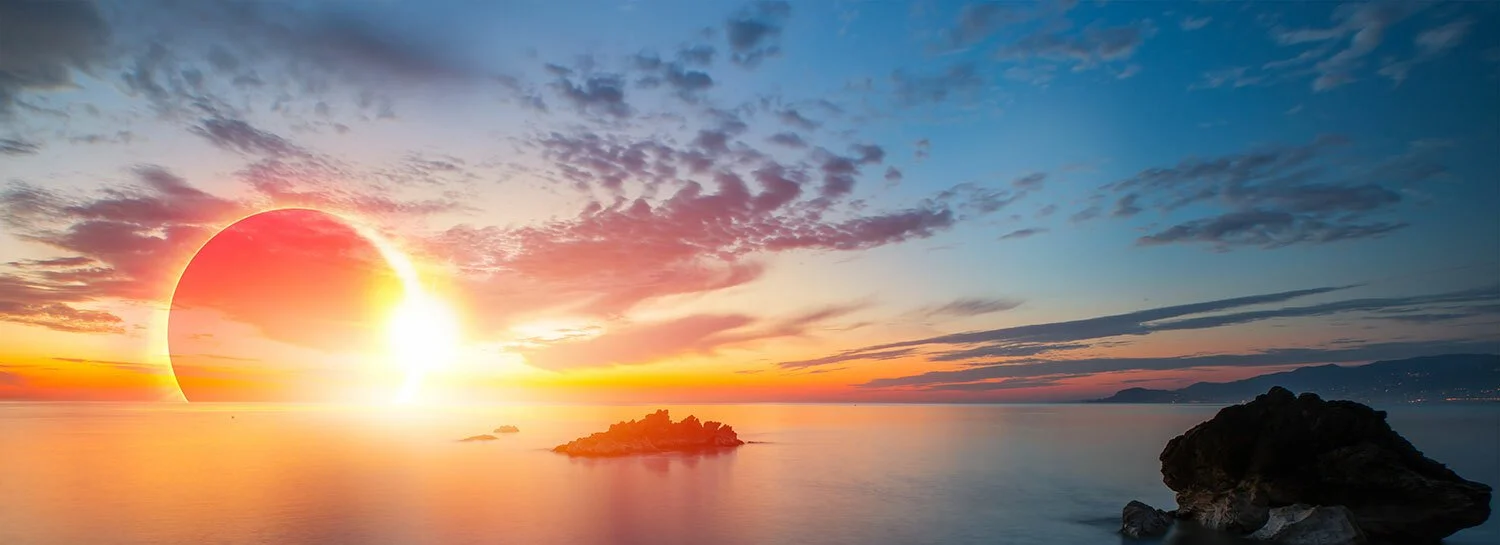
The reason for a solar eclipse is because of a phenomenon known as a syzygy. A syzygy is the nearly straight configuration of three celestial bodies in a gravitational system. The three bodies in a solar eclipse are the Earth, Moon and Sun, with the Moon in a new moon phase between the Earth and the Sun. The eclipse mechanics of a total or annular depends on the Moon’s distance as it passes between Earth and the Sun.
As for the June solstice, the Sun is at aphelion, the point farthest from Earth. But we all know the closer one gets to a fire, the hotter it gets, and the further one gets away from a fire, the cooler it gets. Then how come with the Earth being at its furthest point from the Sun it is getting warmer on Earth (summer)? That is counterintuitive! The answer will be available June 20 at The Sun Circle.
Please join us for two events this June. The first event is known as an annular eclipse, derived from the Latin “annulus” meaning “ring-shaped.” It will be held at Castle Rock on Marblehead Neck. The view from Castle Rock is better than at Preston Beach because of the azimuth of the Sun at this time of year. The timings of the June 10 annular solar eclipse are as follows:
Sunrise 5:07 am Maximum eclipse 5:33 am Last contact 6:32 am
The second event this June is the Summer Solstice on June 20. Sunrise is at 5:06 a.m. It will be held at Preston Beach. If you attend both events you will find out the relationship between the solar eclipse and this June’s summer solstice.
Jim Keating
President of Marlinspike Sailor of Marblehead
Lecturer in Astronomy & Physics at Marblehead High School
Oyster Restoration Seminar
June 11 | 5–7 p.m. | MHD Trading Company, 89 Front St.
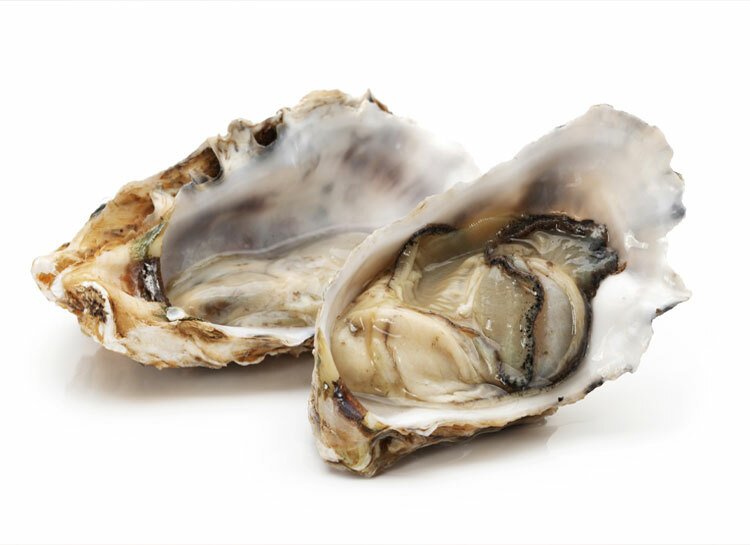
Oysters are a critical part of Massachusetts’ marine ecosystem. Years of pollution and overharvesting have decimated their population. The reintroduction of oysters into local waters have shown to improve water quality, marine habitat and coastal resilience.
Dr. Anamarija Frankic is a professor at the University of Massachusetts in Boston, College of Science and Mathematics. She is the director of the Green Harbor Project and her areas of expertise are coastal ecosystems conversation and management.
This webinar is hosted by Camron Adibi with Sustainable Marblehead. Dr. Anamariya Frankic gave a presentation to Sustainable Marblehead Harbor Group on the many benefits of oyster restoration on March 23, 2021, and can be viewed via this link: Oyster Restoration for Healthy Harbors and Oceans WEBINAR