

CIA Brief | 2024 Fall
President’s Memo
Charya Peou
As summer ends, the CIA Board of Directors celebrates a wonderful summer season and is proud of the successful ways that people worked together for the good of all. We said farewell to our agents and look forward to their return next year. We also say a final goodbye to our agent coordinator Mike Lavender. Mike, your time and dedication were noticed and valued.
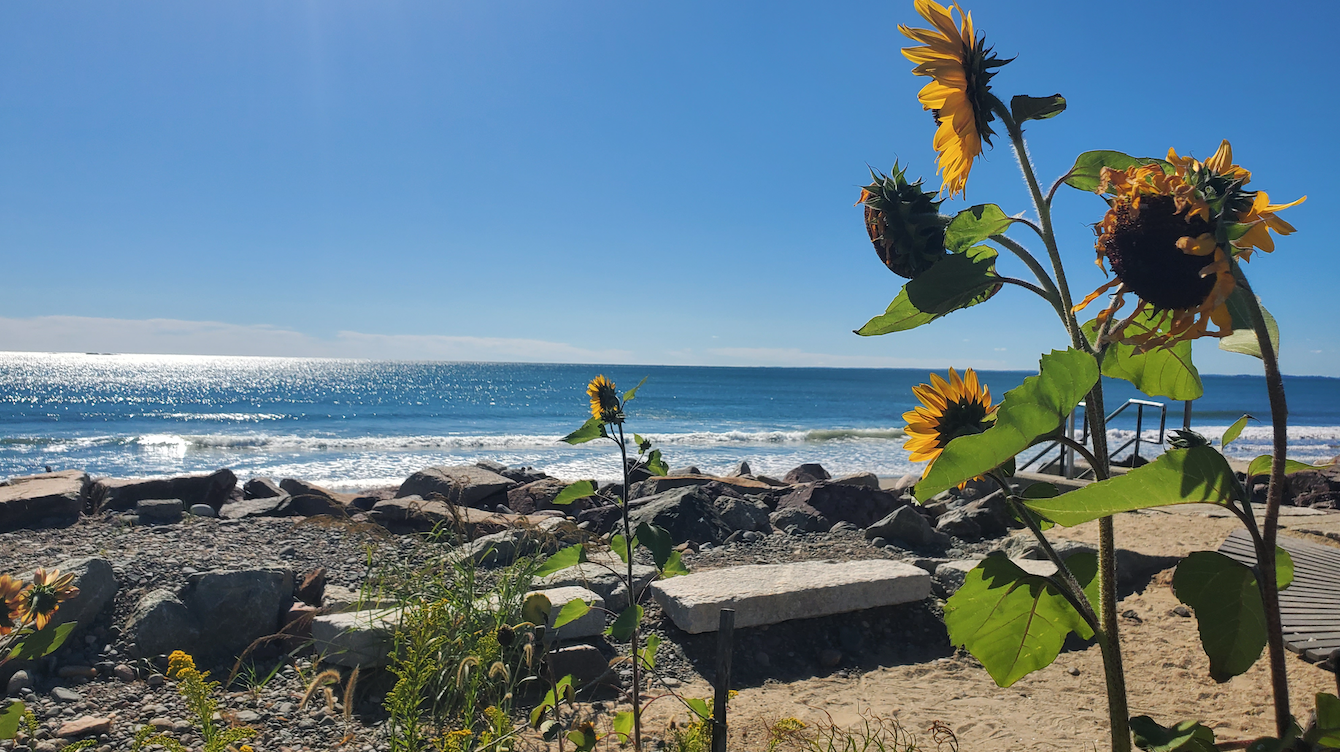
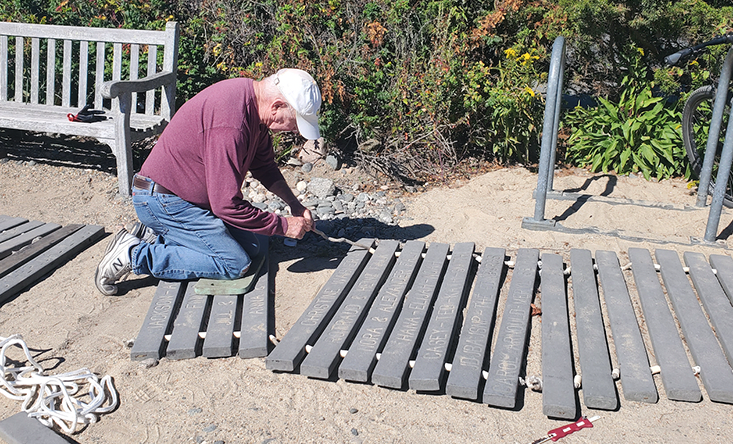
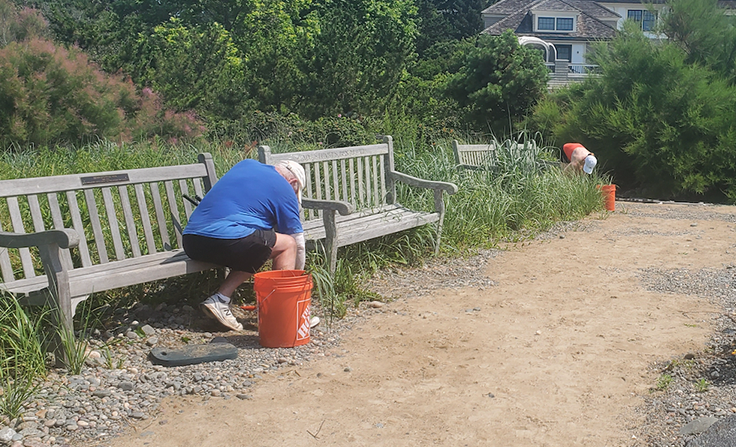
We closed out the season with last minute repairs to the park and with our Sea Weed party, organized by our very own, Krissy Sgambellone. If you are interested in getting more involved with the CIA, email me to join one of our monthly board meetings or volunteer for an upcoming event. We welcome new participants and ideas.
Lastly, I want to extend a special thanks to all our supporters, whether it was buying a membership or plank, making a donation, or helping collect debris left in the park. Your contributions help to make Preston Beach and Beach Bluff Park a much-loved destination.

Overt Operations: Summer Farewell
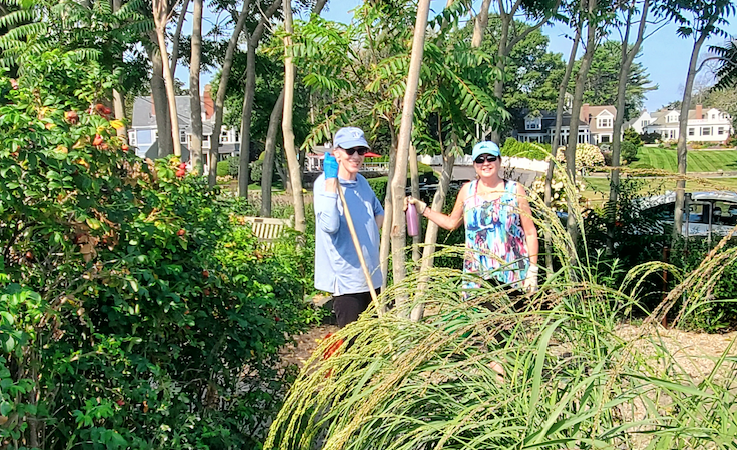
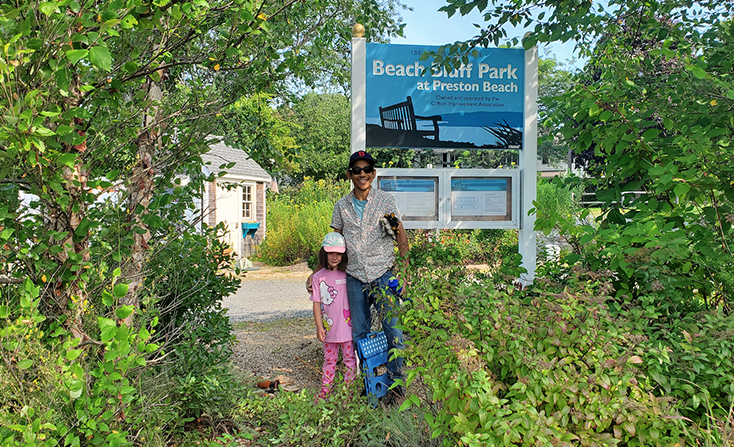
Kelly Upham and Sheryl Levenson
So many of you enjoy spending a day at the beach, specifically, Preston Beach. The CIA, a not-for-profit organization, is delighted to offer people a place to park while visiting the Atlantic Ocean and Beach Bluff Park. Your membership supports our operations, including maintaining the lot and park. When you park in our lot, we trust that you have been welcomed by our “CIA Agents” and have been treated with courtesy and respect.
On hot summer days when the tide is low, the beach is a popular destination, and the lot fills up quickly. We do our best to accommodate our members and we appreciate the understanding you afford us when the lot is full. We have many more members than we do parking spaces, and while it is unusual for the agents to have to put out the “Lot Full” or “Members Only” sign, it does happen. We ask that you continue to show our agents your kindness and respect as they are doing their best to monitor the lot and keep all members safe.
As many of you know, these agents are local students we hire each summer to manage our parking lot between Memorial Day and Labor Day. They provide a friendly interface with our members as they process memberships, issue parking stickers, make sure the lot is maximized, and ensure our Little Free Library and facilities are accessible.
For the past six years, our summer agents have been overseen by Mike Lavender who has provided leadership and guidance, managed work schedules, and processed the agents’ transactions. Mike coaches baseball at Marblehead High School (MHS) and Marblehead youth league basketball and football teams and is on the board of the Marblehead Youth Basketball Association. He also serves as Advisor to the Best Buddies Chapter at MHS. Mike has been a trusted liaison between the Board of Directors and agents during his tenure, and as he wraps up his final summer with us [see President’s Memo], we want to acknowledge his contributions to our summer operations and thank him for his patience, leadership, and work ethic. We’re sure Coach Lav will enjoy a real summer off next year. THANK YOU, Mike!
As we shutter the lot for the summer, we thank you, our members, for a great season. We could not maintain Preston Beach, Beach Bluff Park, and our parking lot and Little Free Library without your support!
Mission Matters: Q&A with Elizabeth Saunders
Lynn Nadeau
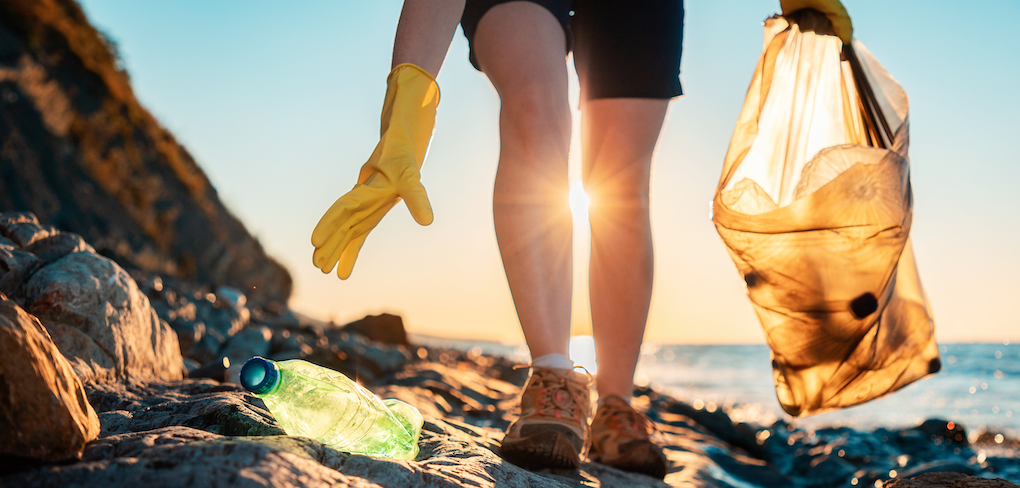
I had the opportunity to chat with Elizabeth Saunders, Massachusetts Director of the Clean Water Action and Clean Water Fund, about the CIA’s work to keep the beach clean. The CWA/F has several programs to stop trash at the start, and her explanation can start us off to think big on trash!
LN: Elizabeth, I’m sure you and Clean Water Action would be pleased to know of the CIA’s work to clean our local beach. So many wonderful people walk by the shore and pick up trash left by others: cigarette butts, plastic water bottles, plastic tampon holders, sippy cups, etc. These are trash left by beachgoers. Of course, there is also the flotsam and jetsam that we see floating in from far away or jettisoned from boats, and this has a big impact on wildlife. We had a dead juvenile female whale wash up on our nearby beach in mid-April (see article in the Spring edition of CIA Brief). We do not yet know what caused its death, but I have seen sickening videos of the contents of whales’ stomachs filled with plastic and netting. We see birds and fish, too, which also makes us sick to think of. What can we do about this situation?
ES: Community efforts to clean up beaches by groups like the CIA are wonderful and make the beach a much more pleasant place for all (humans and wildlife alike!). But if we ever want to be able to stop picking up litter, we need to look upstream at where the things that eventually became trash started. Too much of what we use every day is “single use”—designed to be used once and thrown away. As a result, we have a trash problem. Incinerators, landfills, and transfer stations all pollute our waterways and our air, and lots of these “disposables” end up on the ground or in the water—because they have little value, and no one really cares what happens to them. We need to design stuff to be used over and over again, to be meaningful to us, and to last for a long time. Individuals, manufacturers, retailers, restaurants, and government all have a role to play in this. Government can create infrastructure to support reuse, manufacturers need to design things to be reusable, restaurants and retailers need to sell products that are reusable, and individuals need to choose products that are reusable.
LN: Food packaging generates a lot of plastic and other single use materials. What can be done about that specifically?
ES: ReThink Disposable, a program of Clean Water Action and Clean Water Fund, aims to stop food packaging waste before it starts. We work with local governments, businesses, institutions, and consumers of single-use food packaging to inspire a cultural shift away from the single-use “throwaway” lifestyle. ReThink Disposable works with restaurants that are using single-use disposables. We provide free technical assistance as well as funding to transition to reusable food-ware. Our free technical assistance involves a full audit of the disposable items and their cost and weight, waste-hauling costs, and an analysis on annual savings to switch to reusables. We are working with schools to transition cafeteria dining away from single-use disposables to reusable food-ware. We offer the same in-depth free technical assistance on a larger scale to compile all the audit information for a school or multiple schools in a district. This is the same for other institutions and event spaces.
LN: What if we made it easier for people on the beach to recycle–do you think that would solve the problem?
ES: We should absolutely make it easier for people to recycle. In my opinion, there should never be a trash can in a public place without a clearly labeled recycling bin attached to it. But even if we had that, unfortunately, recycling is not going to solve our trash problem. Done right, recycling is an important part of our product lifecycle, but it needs to be thought of as the second to last resort (with the last resort being the trash can), not the solution. Recycling should only happen after all the reducing, reusing, repairing, and composting options have been exhausted, and products should be designed with that in mind.
LN: What is the problem with recycling?
ES: Recycling is not always technologically easy, and unfortunately, our recycling system is broken. A lot of the materials that get thrown into recycling bins are not able to be recycled because they contaminate each other. Broken glass gets mixed into paper making it impossible to recycle either one; food scraps (which shouldn’t be in recycling bins but invariably are) contaminate paper and cardboard; black plastics are not recycled because the machines can’t pick them out; plastic bags (which, again, shouldn’t be in recycling bins but invariably are) jam up sorting machines leading to system shutdowns and sometimes worker injuries. So far, too much of what is theoretically recyclable ends up in the trash, even if the end user puts it in the recycling bin.
LN: Tell me some more about CWA and the work you are doing locally and at the state level to help us with these trashy problems.
ES: Clean Water Action’s goal is zero waste. In the U.S., over 5 million tons of trash are sent incinerators and landfills in Massachusetts every year, but millions of tons of that waste could have been recycled or composted. There are many materials that are banned from the trash in Massachusetts—everything from glass bottles, to used appliances, to food waste from large institutions and businesses—that are still ending up in the trash. Clean Water Action is pushing the Commonwealth to get serious about reducing our trash by enforcing the existing waste bans, funding municipal composting programs, and reinstating the 1980s moratorium on building new incinerators.
Sightings: Getting Wise to Whales
Julianna Thibodeaux and Roberta Chadis
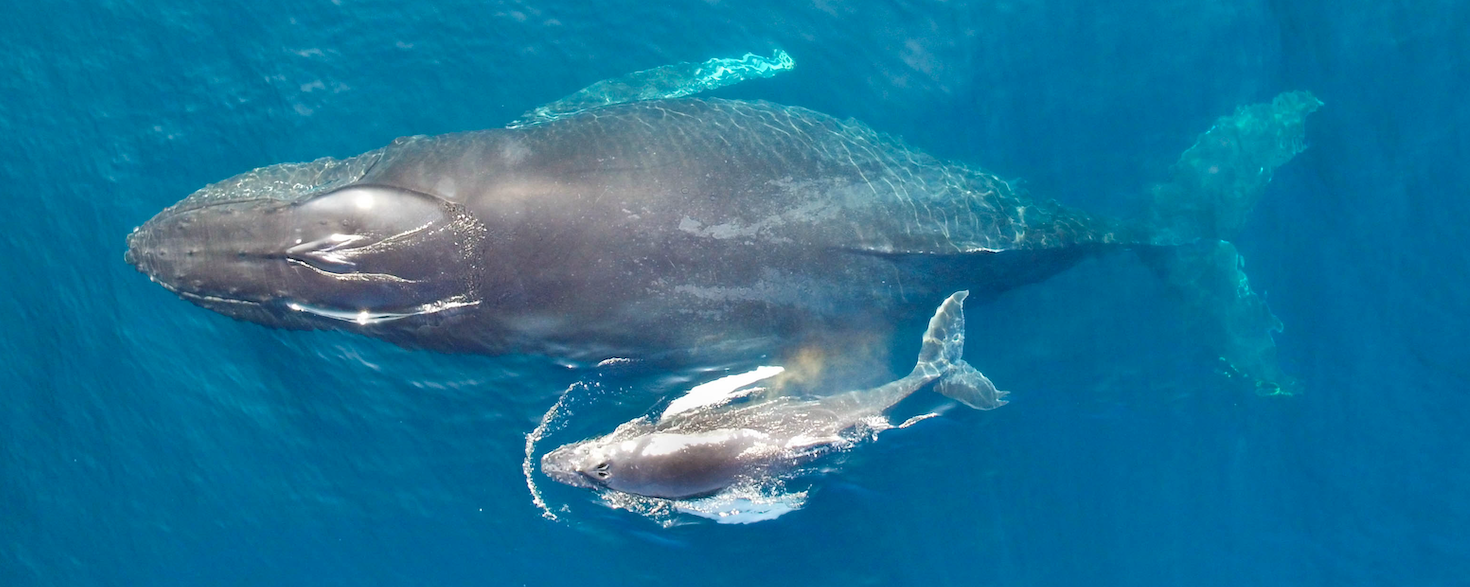
On July 11, the Corinthian Yacht Club hosted a public event with the conservation research organization Oceanwise to a standing room-only crowd. Who knew the local sailing community, and those who might not sail but who care about the ocean, were so concerned—and curious—about the plight of whales? Following on the heels of our own whale tragedy with the death of Espresso, the humpback whale who washed ashore near Preston Beach last spring (see article in the Spring CIA Brief), the evidence is literally in our backyard that whales are in danger.
With the tagline “We need the ocean, the ocean needs us,” Oceanwise is a Vancouver, British Columbia-based not-for-profit organization that conducts research to drive change while educating humans to help implement those changes for the benefit of all—from ocean dwellers to land dwellers. (For context, our own organization, the CIA, is also a mission-driven not-for-profit organization, although on a much smaller scale.)
Oceanwise President and CEO Lasse Gustavsson spoke about their efforts, from smartphone apps we can all use to report whale sightings and thus prevent ship strikes (as Gustavsson put it, “No one actually wants to hit whales”) to building awareness of the harms of releasing microplastics into the ocean’s ecosystem and how to avoid doing so. We can even choose to consume fish that isn’t a major food source for whales. To put this in context, monitoring efforts and post-mortem research by Oceanwise has shown that some whale populations are starving due to overfishing and certain fishing practices. As Gustavsson stated, humans have been harvesting fish for food for 40,000 years, yet in the last 40, overfishing has resulted in lack of sufficient food for some megafauna. (The corollary would be the dramatic increase in climate change since the introduction of fossil fuels, which has had an alarming impact in a relatively short period of history.)
Scientist Chloe Peterson, who also spoke at the event, has a confessed obsession with killer whales, and her life’s work has been dedicated to research to help us understand whales and our role in aiding their sustainability and quality of life. As “charismatic megafauna,” Peterson said, “they have a right to thrive,” yet there is an alarming reduction in prey availability.
Other harms to whales include noise. From undersea seismic testing to ship sonar, this undersea noise is ceaseless, impacting the whale’s echolocation, which is essential for communication. Gustavsson likened the whale’s experience to trying to have a conversation at a crowded party with loud music that never ends. Yet as Gustavsson says, “You can’t point fingers.” Most of us engage in practices without realizing their harms down the food chain, so the first step is awareness. “Driving change requires deep knowledge,” Gustavsson added.
Despite the losses, there are also gains. Humpbacks, for instance, are making a comeback off the West Coast, even as they are dying in our coastal waters here in New England. Smaller boats are beginning to understand the importance of traveling at slower speeds, even though any vessels—including whale watching boats—are a potential threat. Without awareness of the presence of whales, boats can unwittingly disrupt breeding and feeding grounds or strike a whale.
The Whale Alert app is one such effort to steer boats (of all sizes) clear of these creatures. Peterson reports that since 2018, the app has broadcasted more than 60,000 alerts, preventing untold casualties. “Our vision is to help protect whales from ship strikes all over the world,” Peterson stated. As global marine traffic continues to increase, so does the need for vigilance. You can download the Whale Alert app from your iPhone or Android and start your own “citizen scientist” monitoring that will contribute to the conversation and the research. Peterson added that reestablishing kelp forests, or “seaforestation,” is another positive step toward rebuilding habitats across the food chain—from megafauna to microplankton—and reestablishing nurseries for baby whales.
In short, each one of us can make a difference, whether through sustainable fishing (and fish eating) or reducing (or even eliminating) our consumption of single-use plastics (see Mission Matters column in this edition of CIA Brief).
Finally, if you are a boater, consider joining with the larger boating community to take your conservation efforts to sea. Sailors for the Sea, a community of 670 “green” boaters, supports these sustainable practices.
You can, too, just by taking small steps in your own backyard—including Preston Beach.
Autumnal Equinox at the Sun Circle
James F. Keating and Son
The Marlinspike Sailor of Marblehead
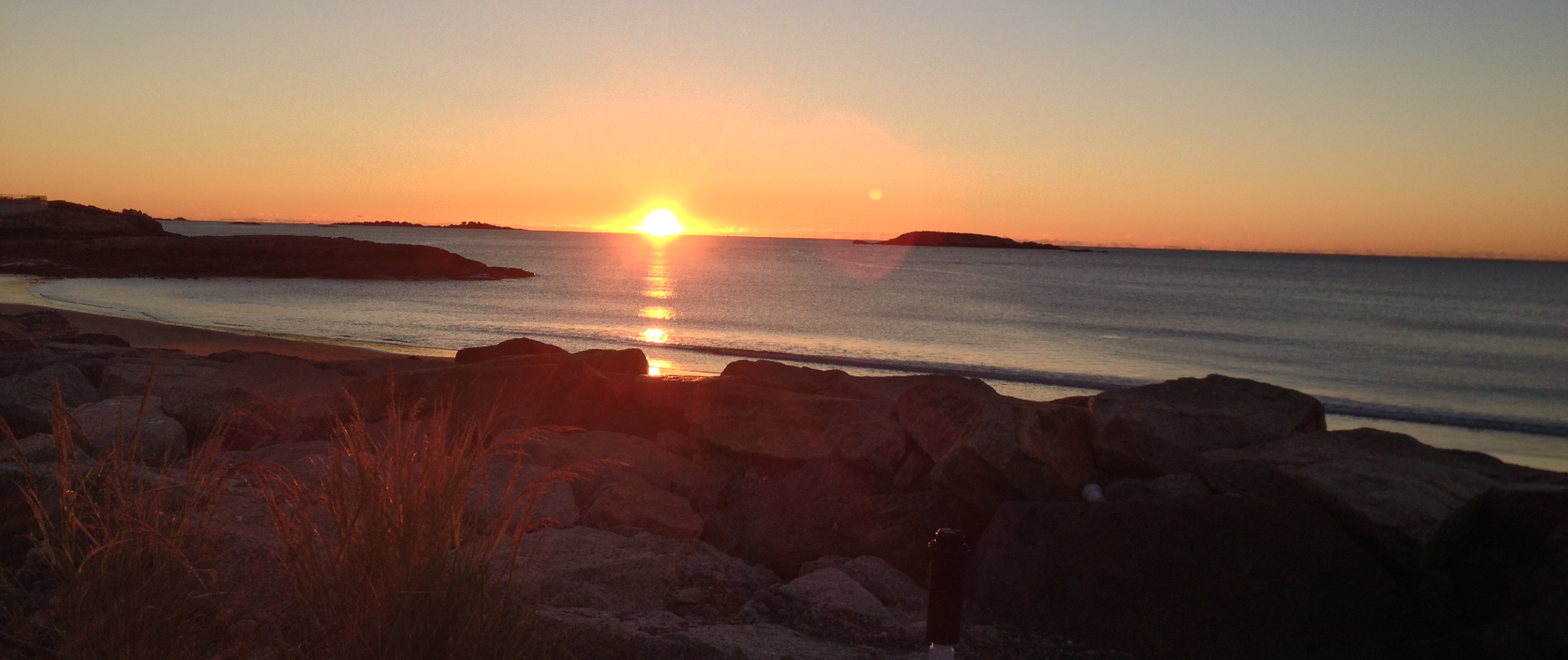
On Sunday, Sept. 22 at 8:43 a.m. EST, the Sun will cross the celestial equator going from the Northern Celestial Hemisphere to the Southern Celestial Hemisphere, decreasing the length of the day and increasing the length of night. The duration of this phenomenon, called “Fall” in the U.S. and “Autumn” in the U.K. will last 89 days, 20 hours, and 37 minutes, until the Winter Solstice in December. The reason for the equinox is Earth’s axis is neither tilted toward the Sun (Summer Solstice) nor away from the Sun (Winter Solstice). There’s a nearly equal amount of light and dark at all latitudes. At the Sun Circle at Beach Bluff Park, at the latitude 42.5*N, the exact day of 12 hours of light and 12 hours of darkness occurs on September 25.
Hopefully we all have many fond memories of this time of year, whether you call if “Fall” or “Autumn.” Those memories could be the associations we share every year at this time. Examples could be going back to school, leaf peeping, football games, Halloween, or Thanksgiving. We also must be aware of the melancholia that comes with shorter amounts of daylight and the grey and cooler days that come with the onset of Winter. A way to deal with this issue is to read the poem “The Wild Swans at Coole,” by W.B. Yeats. If you read the poem, you will understand how it might help.
Please join us at the Sun Circle at Beach Bluff Park on Sunday, Sept. 22, at 6:31 a.m. to welcome Fall. Lisa Kawski and Kampa Vashi Deva will lead the ceremony for the Autumnal Equinox.
The Wild Swans at Coole

The trees are in their autumn beauty,
The woodland paths are dry,
Under the October twilight the water
Mirrors a still sky;
Upon the brimming water among the stones
Are nine and fifty swans.
The nineteenth Autumn has come upon me
Since I first made my count;
I saw, before I had well finished,
All suddenly mount
And scatter wheeling in great broken rings
Upon their clamorous wings.
I have looked upon those brilliant creatures,
And now my heart is sore.
All's changed since I, hearing at twilight,
The first time on this shore,
The bell-beat of their wings above my head,
Trod with a lighter tread.
Unwearied still, lover by lover,
They paddle in the cold,
Companionable streams or climb the air;
Their hearts have not grown old;
Passion or conquest, wander where they will,
Attend upon them still.
But now they drift on the still water
Mysterious, beautiful;
Among what rushes will they build,
By what lake's edge or pool
Delight men's eyes, when I awake some day
To find they have flown away?

In Remembrance: Jon Alexander
Sheryl Levenson
The CIA Board is saddened by the loss of Jon Alexander, a former CIA board member. While Jon’s tenure ended several years ago, he was once an integral part of our operations. For many years, Jon served as a board member, parking lot supervisor, and treasurer for the Clifton Improvement Association, whose mission it is to preserve and improve Preston Beach, Beach Bluff Park, and other natural open spaces in the community. Jon loved to swim at Preston Beach near his home. While Jon had many other attributes, his devotion and commitment to the Clifton Improvement Association helped develop the park to what it is today, and we are eternally grateful. Our sympathy goes out to his family.